
It has only been a few months since we first found out about and tried the innovative tool called “ChatGPT.” Many people have tried it and really liked it. After that, the GPT-3 and GPT-3.5 models started to gain a lot of attention online. Just when we were trying to understand them, OpenAI surprised us by announcing the next generation of the model, GPT-4.
While the previous version was released without much noise, this new version came out with a lot of excitement and was accompanied by various materials showcasing the abilities of the new model. While we are still thinking about the exciting ways we can use GPT-3 and GPT-3.5 to their full potential, the expanded possibilities of GPT-4 allow us to create something even more thrilling.
So, what are the specific possibilities of GPT-4?
GPT-4 – “A New Milestone for Deep Learning Development”
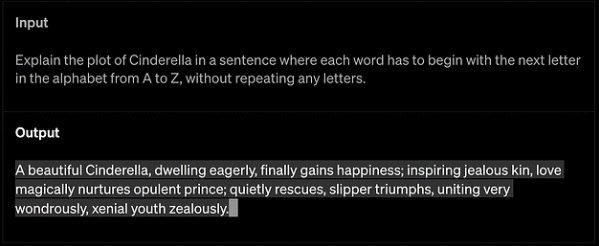
According to Greg Brockman, the president and co-founder of OpenAI, the new model, GPT-4, has several improvements compared to its predecessor. It has enhanced accuracy and better problem-solving and reasoning capabilities. It also shows a deeper understanding of user requests, including the context and meaning, surpassing GPT-3 and GPT-3.5. Additionally, GPT-4 can handle follow-up prompts, such as questions, requests, and comments related to previous prompts within the same conversation. Notably, the level of understanding is not merely superficial but displays more creative evolution.
GPT-4 Creative Capabilities
Reference: OpenAI
In addition, similar to GPT-3.5, GPT-4 has a limitation in that it only learns from data up until 2021. However, users can assist in overcoming this limitation by providing untrained information. By incorporating this new knowledge along with its existing understanding, GPT-4 can effectively process user requests and generate accurate and logical outputs.
Another way the GPT-4 differs from previous models is maneuverability. This means that no matter what output you produce, you will never get a uniform answer. In other words, you can specify the “personality” of this model. Specifically, you can give instructions through “system messages” that dictate things such as the expected tone, style, and even reasoning methods. According to OpenAI, this still has room for improvement and refinement, but the example presented by Greg Brockman on the GPT-4 Developer Livestream was very impressive.
Another big advantage of GPT-4 is that, while the previous model could only process up to 5,000 characters, the new model has an expanded processing capacity of over 25,000 characters. This allows us to process and generate longer forms, such as long content, long conversations, and large-scale materials.
You might think it’s already great enough, but it’s not all there yet! The last and most important difference in GPT-4 is, is that it can accept an image as input. Moreover, rather than simply describing what you see, you can classify what you see in the image, analyze it, and generate different outputs based on it. Give it a meme and it will tell you why it’s funny. Give them pictures of the ingredients and they’ll tell you what you can cook with them. Show them your notes and they can draw reliable conclusions, provide analysis, and even write code based on them. Pretty amazing!
Input: What can I make with these ingredients?

Reference: OpenAI
Output:
There are many options for what you can make with these ingredients! Some possibilities include:
– Pancakes or waffles
– Crepes
– French toast
– Omelette or frittata
– Quiche
– Custard or pudding
– Cake or cupcakes
– Muffins or bread- Cookies or biscuits
All of the above means opening up a really wide range of possibilities for utilizing GPT-4. Now let’s see some examples!
Early Adopters of GPT-4
Since the announcement of GPT-4, more than two months have passed, and during this time, the new model has already found its way into various development projects. Its adoption has been swift, and it is being actively utilized in different industries. The quick integration of GPT-4 into these projects showcases the excitement and eagerness of developers to leverage the capabilities offered by this advanced model.
Duolingo’s GPT-4
The popular language-learning app has integrated GPT-4 into its new subscription version called Duolingo Max, which was announced on the same day as GPT-4’s release. Duolingo Max introduces two significant features called Explain My Answer and Roleplay, which enhance the in-app learning experience.
Explain My Answer addresses the frustration of not understanding why an answer was marked incorrect. With GPT-4, Duolingo’s mascot, Duo, becomes an interactive virtual tutor. Users can chat with Duo to receive explanations on why their answers were wrong or obtain additional examples related to the topic, enabling better comprehension.
On the other hand, the Roleplay feature enables users to practice real conversations. Interactions with AI models in these conversations are quite realistic. Each conversation is unique, eliminating repetition and providing a more authentic and effective learning experience that simulates real-world communication scenarios.
Be My EyesのGPT-4
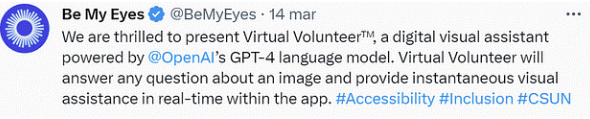
Be My Eyes is a Danish mobile app aimed at helping blind and blind people recognize objects and manage their daily lives. Users can connect with volunteers through live chat and get help in their daily lives by sharing photos and videos.
In-app assistance has so far been provided by an online community of human volunteers. But now GPT-4 has joined its ranks of volunteers!
Reference: Twitter
Khan Academy GPT-4
The mission of this non-profit educational organization is to “provide world-class free education for everyone, everywhere.” Khan Academy offers tools and materials covering a variety of subjects, from math and finance to history and art. This ensures equal access to education for people all over the world. Now Khan Academy is making GPT-4 (a small AI project for now) even more accessible by adapting it to the learning environment!
“Artificial intelligence can guide students through a course and ask questions like a tutor. AI can assist teachers with administrative tasks, saving teachers valuable time. , so you can focus on what matters most: your students.” Founder and CEO of Khan Academy, Sarkhan who is the founder of Khan Academy shared it in an article about GPT-4-based innovations.
Morgan Stanley’s GPT-4
Morgan Stanley is a multinational financial services and investment management company based in the United States. They face challenges in providing asset management support due to the immense volume of data involved. To address this issue, Morgan Stanley publishes a series of articles every year covering various topics such as global asset markets, asset classes, industry analysis, and economic areas.
Morgan Stanley has extensive familiarity with the knowledge encompassed in these articles and can leverage the power of GPT-4 to process this information rapidly. By utilizing GPT-4, Morgan Stanley can access and analyze the content efficiently, allowing them to extract valuable insights and make informed decisions in the field of asset management.
Morgan Stanley was among the early adopters of GPT-4 and used this model to manage a large knowledge base. so that it can be read Finextra article:
“Morgan Stanley Wealth Management will use the technology to access, process, and synthesize content to assimilate its own range of intellectual capital in the form of insights into companies, sectors, asset classes, capital markets, and regions around the world.”
Stripe’s GPT-4
Another early adopter of GPT-4 is Stripe, a financial services and SaaS company. It created a payment processing platform that supports building websites and apps that accept and send payments globally. Stripe uses this model to make documentation more accessible to developers within the Stripe Docs tool. GPT-4 integration allows developers to ask questions within the tool using natural language and get instant summaries of relevant parts of the material or excerpts of specific information. This way, they can focus on building the project they’re working on instead of wasting their energy reading long documents.
GPT-4 and the Icelandic Government
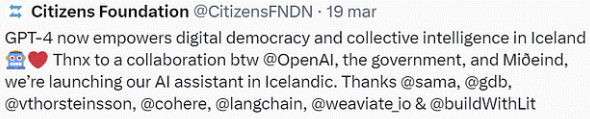
This is not about apps or tools that use GPT-4, so it’s a little different than the example above. In this case, we are talking about cooperation between OpenAI, the Icelandic government, the Citizens Foundation, and the Icelandic language technology company Miðeind ehf. Train GPT-4 in proper Icelandic Grammar and cultural knowledge.
Despite the expanded capabilities of the new model, it was initially significantly lacking in understanding and generating Icelandic material. As you can imagine, the language was unreliable to use. To change that, Miðeind ehf assembled a team of 40 volunteers to train the GPT on proper Icelandic grammar and cultural knowledge. I have fulfilled my mission to train -4.
Reference: Twitter
Potential Use Cases for GPT-4
Indeed, the advancement of technology, such as GPT-4, has the potential to revolutionize the way we work and impact various aspects of our lives. The continuous development of GPT-4 will further enhance its capabilities, opening up possibilities for individuals and organizations.
The effectiveness and capabilities of individuals and organizations can experience a significant boost with GPT-4. Its ability to process and understand large amounts of data, provide accurate insights, and generate creative solutions can lead to increased efficiency and productivity.
Moreover, the impact of GPT-4 is not limited to changing working methods alone. It has the potential to reshape industries, transform decision-making processes, and improve problem-solving across different domains. From healthcare and education to finance and entertainment, GPT-4’s capabilities can be applied to various fields, revolutionizing the way we approach challenges and create value.
It is important to note that GPT-4 is just the beginning, and as the model continues to evolve and improve, its potential impact will likely grow even further. As we embrace and harness the capabilities of technologies like GPT-4, we can anticipate a future where the effectiveness and capabilities of individuals and organizations are greatly amplified, leading to transformative changes in how we live and work.
By using GPT-4, it is possible to:
Get things done faster
– Better planning
– Be more efficient
– Come up with more (better) ideas
Finding more accurate solutions (and faster)
It helps you dig deeper and better understand complex issues.
We can even make the world a better place for people with disabilities, as the example of the Be My Eyes app clearly illustrates.
We used to think that the internet and search engines like Google were the biggest revolution in our access to information. Certainly at some point, but it’s no longer the pinnacle of our potential. Now AI has taken a step further. Not only do we have access to vast amounts of information, but we have the technology to analyze it all, making investigations easier, faster, and easier. Get the answers you need instantly, without spending hours reading sites and articles. Again, this is no assumption of what will happen. A demo version of Bing’s search engine powered by GPT-4.
However, the use case example above, as impressive as it is already, feels like it still doesn’t paint the holistic picture of what can be achieved with GPT-4. They’re early adopters, so everything is new and probably not fully developed yet. Next, let’s broaden this perspective by discussing a use case for the new model, which in this case is both potential and practical.
GPT-4 Can Act as A Personal Trainer
I’m sure you’re familiar with popular recommendation engines across industries, including fitness apps. Take this to a whole new level and imagine you have an interactive virtual trainer or personal trainer (you can call them both) and have ‘someone’ who can make recommendations beyond what you’ve known before. GPT -4 can carefully analyze all aspects of your health, fitness, daily routines, and eating habits, and offers advanced help to incorporate healthy habits and physical activity in ways that fit your life.
Imagine what your assistant could do:
- Body Shape Analysis and Exercise Recommendations: GPT-4 can analyze photos of your body shape and recommend exercises tailored to help you reach your fitness goals. It takes into account your progress, changes in your body, and other relevant information to adjust and refine exercise suggestions over time.
- Customized Workout Plans: GPT-4 considers your physical abilities, limitations, and health status to provide workout recommendations that align with your needs. It can even incorporate medication recommendations from your doctor if you upload that information to the system. This ensures that the workout plans are safe and suitable for your specific circumstances.
- Personalized Meal Suggestions: GPT-4 understands your dietary requirements, including allergies, and takes into consideration recommendations from nutritionists and doctors. Based on this information and your preferences, GPT-4 can provide you with meal ideas that align with your needs and help you maintain a healthy and varied diet. Even if you have restrictions or preferences, GPT-4 can suggest alternative options, ensuring you have a diverse range of healthy meal choices.
- Schedule Integration: GPT-4 can analyze your weekly schedule, including plans and responsibilities, and seamlessly incorporate training sessions into your routine. This feature saves you time and effort by automatically scheduling workouts so that you can efficiently manage your commitments without neglecting your fitness goals.
Not only for people who love to exercise and eat healthy food and need some help in organizing their daily life, but also for those who have trouble eating or want to motivate them to exercise regularly It can be the perfect solution for both people.

GPT-4 Can Act as A Personal Trainer
GPT-4 Can Be Used as An Analytical Assistant
GPT-4 has advanced analytical capabilities, so it can parse data in various formats such as text, tables, and graphs. As such, GPT-4 can serve as an efficient assistant for human analysts working with vast amounts of complex data, drawing higher-quality and valuable conclusions and optimizing their work. And in the absence of data analysts, domain experts can help support data-driven decision-making.
In this format, GPT-4 can also play an innovative role in education. For example, imagine a tool that allows aspiring data analyst students to check their inferences and conclusions and discuss them with their models. Students can learn faster by quickly identifying errors in approach and mistakes that can interfere with the learning process.
GPT-4 in Marketing is an Engagement Prediction Tool
When applied to marketing, GPT-4 not only does everything GPT-3 and GPT-3.5 can do but also opens up new possibilities. GPT-4 can also accept images as input, making it more versatile.
Our AI team came up with the idea of a tool that uses GPT-4 to predict high engagement on social media. For example, if a fashion brand wants to attract its target audience and create more buzz around the brand, GPT-4 can be used to analyze trending content on social media to determine which of the materials for the campaign are the most attention-grabbing. You can choose images and photos that you are likely to collect. You can also ask for suggestions for improvement. GPT-4 is steerable, allowing users to precisely determine the viewpoint for analyzing images and receive highly accurate recommendations.
By leveraging this tool, businesses and individuals can expand their ability to reach their desired target audience, increase engagement, and enhance their marketing efforts.
GPT-4 as A Career Counselor
How about using GPT-4 as a career advisor? The app analyzes a user’s education and career history, interests, successes, and failures, and can suggest steps they should take or advise them on a new career path.
For example, let’s say someone is fed up with their current job and wants to do something else. Many people are like this, and they know their own skills, what they like, what they are interested in, what they are good at, and what they are not good at, but they feel that they do not know how to make use of them. People like this need advice.
Based on self-analysis, this app can suggest which occupations match the user’s skills and interests and also work together with them to come up with new career paths. And when we find the right direction, we’ll advise you on which courses to take, which skills to hone, and help you succeed in your new career path.

GPT-4 as A Vocational Counselor
GPT-4 in Mental Health Counselors
Given that GPT-4 already has incredible capabilities, it is likely to become more and more widespread over time, going a step further and helping people spot red flags in their online activity. Think of it as technology. Is someone suffering from mental illness or having suicidal thoughts?
Of course, the form of such a monitoring tool is a complex matter, requiring analysis of all ethical aspects and creating a well-thought-out whole system around it. let’s put We assume that there is general social consent to track our online activity to track alarming behaviors related to mental illness and to introduce the system if certain conditions are met. prize. Such information is sent to specialized mental health organizations that reach out and provide assistance to “flagged” users. A system like this could help you start noticing signs that were previously unnoticeable. In many tragic cases, it is already too late for the signs to become ‘visible’ to friends and family.
Or, to make this idea more realistic, it could be an app you can install on your phone when you feel something is wrong, but you’re not yet ready to ask for help. Such apps help track the user’s mood. In addition, it can monitor users’ online activities and many other things. You can also monitor the music that users are listening to. The app then analyzes the collected data and alerts the user if the conclusion indicates that there is reason to believe that the person needs at least a professional evaluation.
Apps can be interactive or include chat functionality, so users can talk to their virtual assistant at any time, asking questions about therapy or psychiatric care, for example. Or any other question you might be embarrassed to ask elsewhere for fear of “revealing” your mental problems. A great goal of such a GPT-4-powered assistant is to help users familiarize themselves with the concepts of therapy and psychiatric treatments and begin to feel more comfortable with the idea of using them.
Imagine all these people who are afraid to speak up about their struggles or ask for help could take this “half step” in the right direction. Ultimately, proper treatment can be initiated, and it may even save lives. Isn’t that a bright vision?
Conclusion
There is no doubt that GPT-4 has the potential to revolutionize the world in a way similar to the introduction of the Internet a few years ago. Of course, it should be borne in mind that as of today, this technology is still imperfect, and even its creators have carefully emphasized this fact. Given that this model already has all of these breakthrough features, just imagine how beautifully all GPT-4 powered solutions will grow as the model is further developed. !
If you have any questions related to GPT4 application, please feel free to book a free consultation.
