
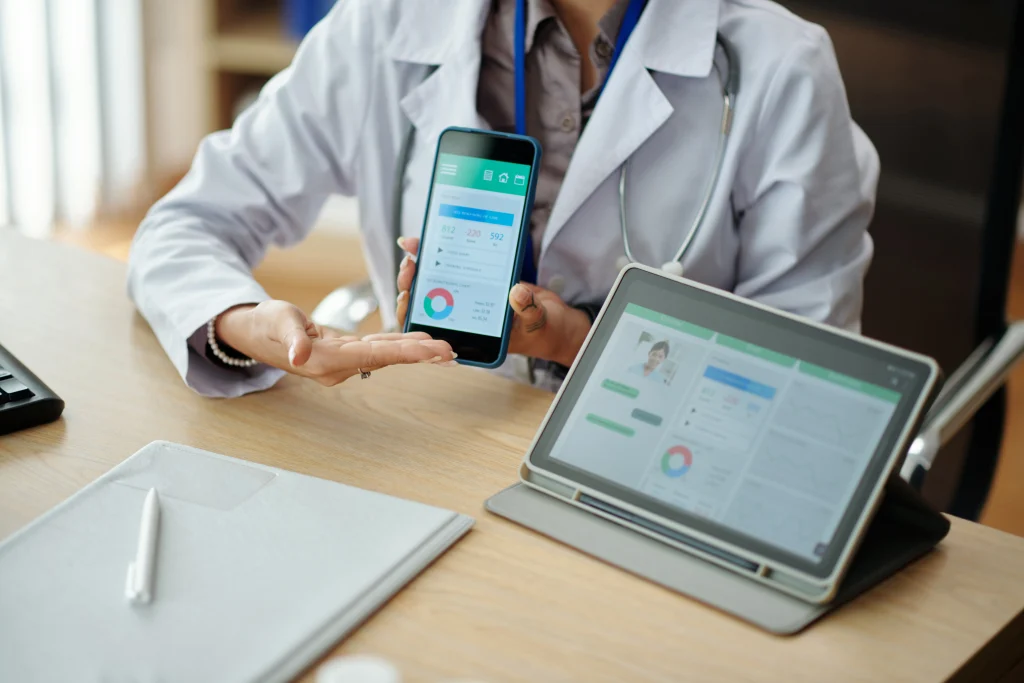
Not long ago, healthcare organizations viewed software mainly as an operational tool.
A system stored patient records. Another managed appointments. A separate platform handled billing. Each application performed a specific function, and for many years that was sufficient.
Today’s healthcare environment is very different.
Patients expect digital experiences similar to those they encounter in banking, retail, and other industries. Providers need greater operational efficiency. Healthcare businesses are managing growing volumes of data while navigating increasingly complex compliance requirements.
As a result, software has become more than a support system.
It has become a competitive differentiator.
For healthcare providers, clinics, hospital groups, healthcare startups, telemedicine companies, and digital health platforms, the question is no longer whether to invest in software.
The question is what type of healthcare application creates the greatest business value.
This is where working with an experienced healthcare app development company becomes important. The discussion moves beyond features and technology stacks and focuses on business goals, operational workflows, patient experiences, and long-term scalability.
Healthcare Businesses Are Facing Different Challenges Than They Were Five Years Ago
Many healthcare systems were built to support internal processes rather than digital experiences.
Patients called to book appointments.
Staff manually entered information.
Medical records were managed separately from communication systems.
Data often existed across multiple environments.
At the time, these workflows were acceptable.
Today they create friction.
Patients want self-service experiences.
Healthcare professionals need access to information across systems.
Leadership teams need operational visibility.
Organizations want to leverage analytics, automation, and AI initiatives.
These goals are difficult to achieve when technology environments are fragmented.
This is one reason healthcare organizations are increasingly investing in custom applications instead of relying entirely on off-the-shelf platforms.
The objective isn’t simply modernization.
It’s creating a healthcare ecosystem that supports both current operations and future growth.
Not Every Healthcare App Solves the Same Problem
One mistake organizations often make is treating healthcare applications as a single category.
In reality, healthcare businesses use a wide range of application types, each designed to address different operational and clinical needs.
Understanding the business objective is often the first step in defining the right solution.
A healthcare app development initiative typically falls into one or more of several categories.
Patient-Facing Applications
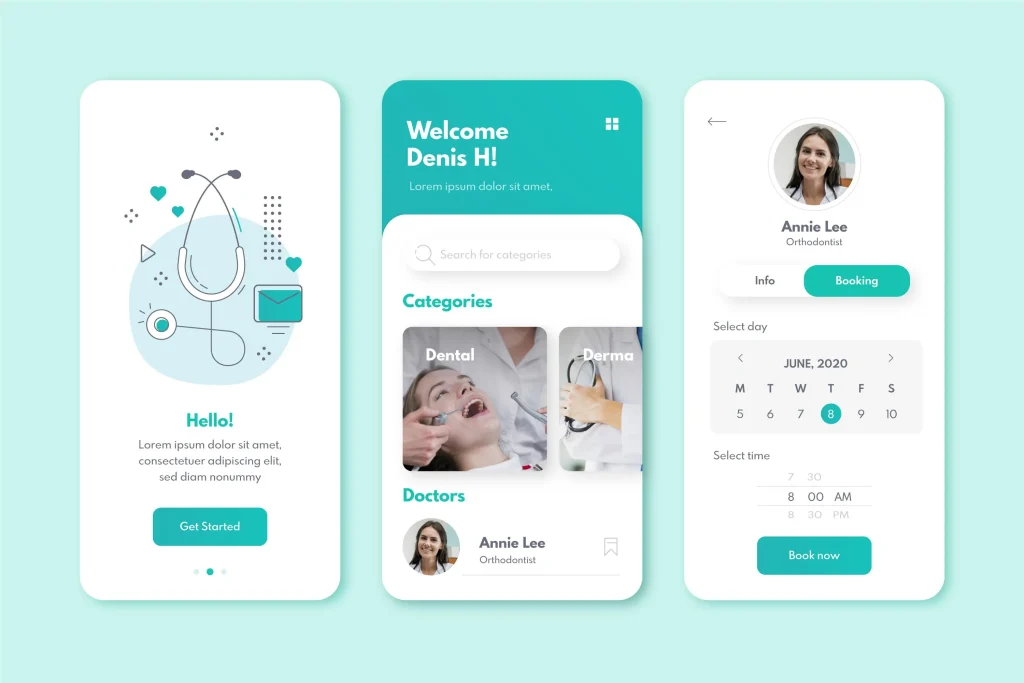
Patient engagement has become a strategic priority for many healthcare organizations.
Patients increasingly expect convenient access to healthcare services through digital channels.
This has led to significant demand for applications that allow users to:
- Book appointments
- Access medical records
- Receive notifications
- View treatment plans
- Conduct telehealth consultations
- Manage prescriptions
- Communicate with healthcare providers
The value extends beyond convenience.
These applications can reduce administrative workloads, improve patient retention, and create a more connected healthcare experience.
For healthcare businesses competing in increasingly digital markets, patient-facing applications often become a major differentiator.
Provider and Clinical Applications
Not all healthcare software is designed for patients.
Many of the most valuable applications support healthcare professionals directly.
Clinicians frequently work within environments that require rapid access to information and streamlined workflows.
Custom applications may help providers:
- Access patient records
- Review treatment histories
- Coordinate care plans
- Manage clinical workflows
- Improve documentation processes
- Access decision-support tools
The objective is not replacing healthcare professionals.
The objective is reducing administrative friction so professionals can focus more time on patient care.
When evaluating custom healthcare software, operational efficiency often becomes just as important as functionality.
Telehealth and Virtual Care Platforms
Telehealth is no longer considered a temporary solution.
For many providers, it has become a permanent component of healthcare delivery.
However, many organizations discover that generic video conferencing solutions only solve part of the problem.
A successful virtual care platform often needs to support:
- Appointment scheduling
- Patient identity verification
- Medical documentation
- Secure communication
- Payment processing
- EHR integration
- Clinical workflow management
This is where a specialized healthcare app development company can help organizations move beyond basic telehealth capabilities and create platforms aligned with clinical and business requirements.
Internal Operational Applications

Some of the highest-value healthcare applications are invisible to patients.
Healthcare organizations rely on internal systems to manage operations, resources, staffing, compliance, approvals, and reporting.
These systems often grow organically over time.
Spreadsheets supplement missing functionality.
Departments introduce separate solutions.
Processes become fragmented.
Eventually, operational inefficiencies begin affecting business performance.
Custom internal applications allow healthcare organizations to simplify workflows, improve visibility, and reduce manual effort.
For many healthcare businesses, operational software delivers some of the strongest ROI because it influences productivity across the entire organization.
Why Customization Matters in Healthcare
Healthcare is rarely a one-size-fits-all industry.
Different providers operate using different workflows, service models, specialties, and regulatory requirements.
This creates limitations for organizations relying entirely on generic software.
A clinic specializing in diagnostic services may have different needs from a hospital network.
A telehealth startup faces different requirements than a rehabilitation provider.
A healthtech company building digital products serves a different audience entirely.
Custom applications allow organizations to design platforms around how the business actually operates.
Instead of adapting workflows to fit software limitations, software supports the organization’s unique processes.
This principle often becomes increasingly valuable as healthcare businesses grow and become more specialized.
EHR and EMR Integration Is Often the Most Important Requirement
One of the most common challenges in healthcare software development is integration.
Healthcare organizations rarely operate with a single application.
Instead, they rely on multiple systems simultaneously.
Electronic Health Records (EHRs) and Electronic Medical Records (EMRs) frequently serve as the foundation of healthcare operations.
A custom application may provide excellent functionality, but if it cannot exchange information effectively with existing healthcare systems, adoption becomes difficult.
This is why integration is often more important than individual features.
Modern healthcare applications commonly integrate with:
- EHR systems
- EMR platforms
- Practice management systems
- Scheduling solutions
- Billing systems
- Laboratory information systems
- Telehealth platforms
The objective is not simply connecting systems.
The objective is creating a unified flow of information across the healthcare ecosystem.
Integration Is a Business Challenge, Not Just a Technical One
Many organizations think about EHR integration purely from a technical perspective.
The business impact is often much larger.
When systems exchange information effectively:
- Staff spend less time on data entry.
- Clinicians gain access to more complete information.
- Reporting becomes more reliable.
- Operational efficiency improves.
- Patient experiences become smoother.
Poor integration creates the opposite effect.
Manual processes increase.
Information becomes fragmented.
Decision-making slows.
As healthcare organizations expand digital capabilities, seamless integration often becomes one of the biggest determinants of project success.
What Healthcare Leaders Should Look for in a Development Partner
Choosing a development partner is about more than software engineering capability.
Healthcare projects involve unique requirements that do not always exist in other industries.
Organizations should evaluate whether a potential healthcare app development company understands:
- Healthcare workflows
- Regulatory considerations
- Data privacy requirements
- EHR and EMR integration
- Interoperability standards
- Scalability planning
- Security best practices
Technical skills remain important.
However, organizations often achieve stronger long-term results when their development partner understands the healthcare business environment as well as the technology itself.
Building for Today’s Needs Is Not Enough
One pattern we frequently observe is organizations building applications that address immediate needs without considering future expansion.
This creates problems later.
Healthcare businesses evolve.
Services expand.
Patient volumes grow.
New regulations emerge.
AI initiatives become priorities.
Additional systems require integration.
Applications should therefore be designed not only for the current state of the business but also for future growth.
Scalability is not simply a technology concern.
It is a business strategy concern.
The strongest healthcare platforms are built with enough flexibility to support changing organizational objectives over time.
The Future of Healthcare Applications Will Be Connected
The future of healthcare software is unlikely to consist of isolated applications.
Instead, organizations are moving toward connected ecosystems.
Patient engagement platforms interact with EHR systems.
Operational systems integrate with analytics tools.
Telehealth applications exchange data with clinical environments.
AI systems access knowledge from multiple sources.
The goal is creating a healthcare experience in which information moves seamlessly between applications, departments, and stakeholders.
Organizations investing in custom healthcare software today should consider how their applications will fit into that broader ecosystem tomorrow.
Build Applications Around Healthcare Business Needs
Healthcare software projects are often discussed in terms of technologies, frameworks, or features.
Those elements matter.
But they are not usually what determines success.
Successful projects begin with business objectives.
What operational challenges need solving?
What patient experiences need improvement?
What workflows need optimization?
What systems need integration?
A modern healthcare application should do more than perform a task.
It should help the organization deliver better services, operate more efficiently, and adapt more easily to future opportunities.
That is why many healthcare providers, healthcare startups, and digital health companies work with an experienced healthcare app development company.
The goal is not simply building another application.
The goal is creating healthcare technology that supports long-term business growth.
Relipa
Relipa is a Vietnam-based software development company established in April 2016. After two years of growth, our Japanese branch – Relipa Japan – was officially founded in July 2018.
We provide services in MVP development, web and mobile application development, and blockchain solutions. With a team of over 100 professional IT engineers and experienced project managers, Relipa has become a reliable partner for many enterprises and has successfully delivered more than 500 projects for startups and businesses worldwide.
