
In recent years, blockchain technology has transformed the way startups and enterprises raise capital. Traditional fundraising methods such as bank loans or stock issuance often require complex procedures, intermediaries, and strict qualifications. Today, however, businesses can leverage blockchain-based fundraising models such as IDO, ICO, and IEO to access global investors faster and more efficiently.
As the demand for decentralized applications continues to grow, many businesses are searching for a reliable blockchain development company to support token development, smart contract deployment, NFT ecosystems, and Web3 fundraising platforms.
This article explains what IDO is, how it differs from ICO and IEO, and why working with an experienced blockchain development company is essential for successful blockchain fundraising projects.
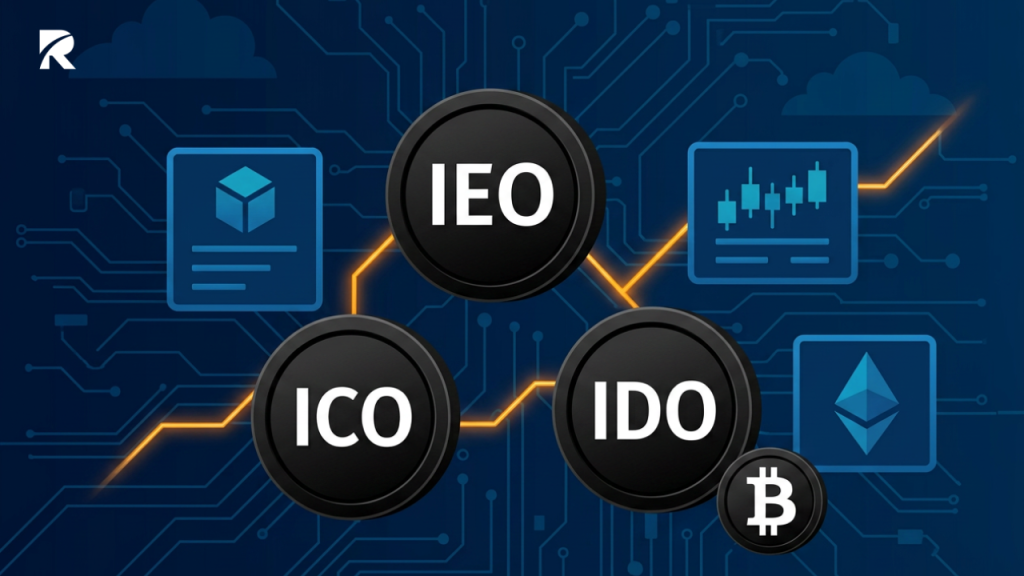
What is IDO?
IDO and ICO
Before IDOs (Initial DEX Offerings) became one of the leading fundraising models in the Web3 industry, ICOs (Initial Coin Offerings) were the most widely used method for blockchain fundraising. ICOs allowed blockchain startups to issue their own cryptocurrency tokens directly to investors in exchange for funding, helping projects raise capital quickly without relying on banks, venture capital firms, or traditional financial institutions.
During the cryptocurrency boom in 2017, ICOs experienced explosive growth because they provided startups with a fast and decentralized way to secure investment. Many blockchain companies successfully raised millions of dollars within a short period of time. At that stage, businesses increasingly relied on a professional blockchain development company to create tokens, build blockchain infrastructure, and launch ICO platforms.
The ICO model was relatively simple. Investors would send cryptocurrencies such as Bitcoin or Ethereum to a project wallet and receive newly issued tokens in return. These tokens could later be traded on cryptocurrency exchanges or used within the project’s ecosystem. ICOs became especially popular among startups developing DeFi platforms, NFT ecosystems, blockchain gaming projects, and decentralized applications.
However, despite their popularity, ICOs quickly revealed several major weaknesses that damaged investor confidence across the blockchain industry.
One of the biggest problems was the lack of regulatory oversight. Most ICO projects operated without proper compliance procedures, investor protection mechanisms, or transparent reporting standards. Because blockchain fundraising was still relatively new, many startups launched token sales with little accountability.
Transparency was also a major concern. Unlike modern decentralized fundraising systems, many ICOs operated through centralized websites and private wallets, making it difficult for investors to track how funds were managed. Without blockchain-based liquidity mechanisms or automated smart contracts, token distribution processes were often unclear and vulnerable to manipulation.
As the market matured, investors began demanding safer and more transparent fundraising models. This created the need for more reliable blockchain fundraising solutions such as IDOs, which leverage decentralized exchanges and smart contract automation to improve security, accessibility, and transparency.
Compared to ICOs, IDOs offer several important advantages:
- Decentralized fundraising infrastructure
- Automated smart contract execution
- Improved transparency through on-chain transactions
- Instant token liquidity on decentralized exchanges
- Reduced reliance on centralized intermediaries
- Better investor accessibility and participation
Modern IDO projects are also more technically advanced because they are often developed with the support of an experienced blockchain development company. These companies help startups create secure smart contracts, perform blockchain security audits, design tokenomics systems, and integrate decentralized wallet functionality.
Today, many blockchain startups prefer IDOs over ICOs because decentralized exchange integration provides greater investor trust and immediate market liquidity. In addition, blockchain technology has evolved significantly since the early ICO era, enabling more scalable and secure fundraising ecosystems for Web3 applications.
A trusted blockchain development company now plays a critical role in helping businesses transition from outdated ICO models to more advanced decentralized fundraising solutions. From smart contract development to NFT integration and DeFi ecosystem creation, blockchain companies provide the technical expertise necessary to launch successful Web3 projects in today’s competitive digital economy.
Why Some Projects Donot Use ICO?
IEO
IEO stands for “Initial Exchange Offering.”
Unlike ICOs, IEOs are conducted through centralized cryptocurrency exchanges. The exchange reviews blockchain projects before listing their tokens for fundraising.
This model improved investor confidence because exchanges performed screening processes before allowing projects to launch.
However, IEOs also introduced limitations:
- Strict approval requirements
- Centralized control
- Higher listing costs
- More difficult participation procedures
As a result, blockchain startups began searching for more decentralized alternatives.
Why is IDO Actively Used?
IDO emerged as a more advanced fundraising model that combines decentralization with accessibility.
Because IDOs operate through decentralized exchanges, they offer:
- Faster fundraising
- Lower transaction costs
- Greater transparency
- Permissionless participation
- Direct peer-to-peer transactions
The rapid growth of decentralized finance (DeFi) also accelerated IDO adoption. Through Ethereum smart contracts, businesses can now build financial systems without relying on banks or centralized institutions.
Today, IDOs are widely used for:
- DeFi applications
- NFT marketplaces
- Metaverse platforms
- Web3 startups
- Blockchain gaming ecosystems
As blockchain technology evolves, IDOs continue to become one of the most effective fundraising strategies for emerging crypto businesses.
Reference: IDO Development in Japan, legal or not?
Steps to IDO
IDO is conducted through specialized IDO platforms within decentralized exchanges (DEXs). Popular platforms include Polkastarter, DAO Maker, and Solstarter. Many businesses work with a professional blockchain development company to prepare and launch IDO projects successfully on these platforms.
The most important factor for a successful IDO is presenting an attractive blockchain project that appeals to investors. A detailed white paper is one of the key investment criteria in the blockchain industry. It should clearly explain the project concept, roadmap, tokenomics, blockchain technology, token supply, pricing strategy, and future vision. An experienced blockchain development company can help businesses create secure token ecosystems and technically strong blockchain infrastructures that improve investor confidence.
The Future of IDO and Blockchain Development
Also see: Relipa’s NFT Development Service (Japanese – Translated English)
