
Well-designed business systems are the backbone of modern enterprises, enabling organizations to streamline operations, improve collaboration, and manage complex workflows such as accounting, project management, approvals, and supply chain activities. In today’s digital-first environment, many businesses rely on a professional website development company to build and optimize these systems for performance, scalability, and long-term growth.
However, even the most advanced system can fail to deliver value if it lacks a consistent and intuitive user experience (UX). A reliable website development company understands that usability is just as important as functionality. If employees struggle to navigate or understand the system, adoption rates will drop, and the organization will not fully benefit from its investment.
A business system only becomes truly effective when it is widely used across all departments and when every feature is leveraged efficiently. That is why leading organizations partner with an experienced website development company to design systems that prioritize user-friendly UI/UX. By simplifying complex processes and ensuring intuitive interactions, businesses can empower employees to work more efficiently, reduce errors, and ultimately drive better operational outcomes.
In this article, we will explore the importance of business systems, the role of UI/UX design, and how a strategic approach—often guided by a skilled website development company—can transform enterprise platforms into powerful tools for productivity and growth.
What is a Business System & Why is it Important?
A business system is a structured set of processes, tools, and practices designed to help organizations operate efficiently and achieve specific goals. In modern enterprises, business systems act as a centralized ecosystem that connects departments such as accounting, HR, operations, and supply chain into a unified workflow.
For any organization working with a professional website development company, building a well-structured business system is a critical step toward digital transformation. These systems ensure that all departments function cohesively, enabling companies to scale faster and operate like a well-oiled machine.
Business systems can vary widely depending on industry and function—from sales management systems to internal workflow automation. A reliable website development company can customize these systems to align with specific business objectives and operational needs.
The six main benefits are:
Increased Efficiency: Tasks that can be managed by business systems are typically routine and repetitive. Even when these tasks cannot be automated by technology, the system reduces the time and effort required by employees, thus saving the business time and money.
Ensuring Consistency: Having everyone adhere to a common system ensures that the same tasks are performed consistently every time, resulting in more reliable results. This, in turn, increases business productivity, enabling you to serve more customers and boost revenue.
Clarifying Expectations: Through the system, employees gain a clearer understanding of the behaviors and results expected from them.
Facilitating Rapid Expansion: By developing and linking an effective set of business systems, you lay the foundation for improved business efficiency and productivity, which, in turn, allows for rapid expansion.
Optimizing Processes: System documentation and flowcharting reveal duplicative processes and provide opportunities to streamline operations by eliminating unnecessary steps.
Efficient Control without Close Management: With an effective system in place, management can confidently track progress according to plan. This system provides a means to monitor and control key aspects of the business without requiring detailed oversight.
Learn More: Discover how monitoring your business systems can help you mitigate potential business risks.
The Importance of Easy-to-Use Business Systems for Employees
User-friendly business systems—especially ERP platforms—play a crucial role in organizational success. However, their effectiveness depends heavily on UX design.
A modern website development company understands that even the most powerful system will fail if employees find it difficult to use. That’s why intuitive UI/UX design is essential.
Why Easy-to-Use UX Matters:
- Simplicity: ERP encompasses various complex business processes, from accounting to supply chain management. While these areas demand specialized knowledge, effective UX design simplifies the complexity, making it manageable and intuitive for users. A sophisticated UX design empowers users to perform tasks efficiently.
- Improved Performance: A user-friendly ERP UI/UX design can significantly boost business performance. By simplifying tasks for employees, operations become more efficient, leading to overall enhanced business performance.
- Personalization: ERP serves multiple departments within a company, necessitating flexibility and customization options. A well-crafted UX design allows users to personalize the system to their preferences, adjusting colors, styles, widget placements, and more. This customization fosters user satisfaction and encourages widespread adoption of the system.
Fundamental Philosophy of UI/UX Design
UI/UX design focuses on creating interfaces that are intuitive, efficient, and enjoyable for users across all levels of technical expertise. In the context of enterprise systems, where workflows can be complex and data-heavy, the role of UI/UX becomes even more critical. A top-tier website development company not only builds functional systems but also ensures that every interaction within the interface is smooth, logical, and user-centered. By applying proven design principles, businesses can create digital products that employees actually want to use—leading to higher adoption rates and better overall performance.
Clarity
Clarity is the foundation of any effective user interface. Every element—whether it’s a button, form, or navigation menu—should have a clear purpose and be easily distinguishable from others. A professional website development company prioritizes clarity by organizing content logically, labeling actions clearly, and minimizing unnecessary complexity. When users instantly understand how to interact with a system, they can complete tasks faster and with fewer errors, significantly improving productivity.
- Fill user knowledge gaps
Provide users with the information they need to use your website, application, or system and minimize knowledge gaps. Organize information that users should know in advance to support smooth operation.
- Intuitive navigation
Design your navigation system with user-friendliness in mind. Use clear buttons and links that guide users seamlessly between pages. Make it easy for users to find their way around your interface.
- High Visibility Elements
Create buttons and links that are highly visible and stand out from the rest of the content. This encourages users to take important actions. Visibility helps users quickly identify where to click.
- Clarification of purpose
Ensure that each element on your interface has a clear purpose and role. This clarity helps users understand what is expected of them and how to interact with your website, application, or system. Arrange information and functions logically to minimize confusion.
User-Friendliness
User-friendliness is about creating a sense of familiarity and comfort. Interfaces should follow common design conventions so users don’t have to relearn how to navigate each system. A trusted website development company leverages established UI patterns, such as standard menu placements and intuitive icons, to reduce the learning curve. When users feel comfortable with the interface, they are more likely to engage with the system regularly and use its full range of features.
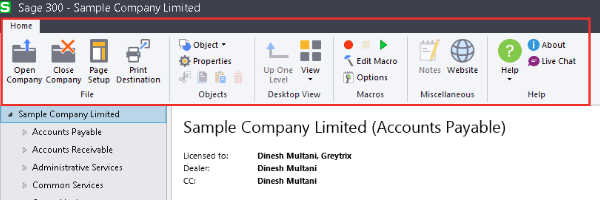
Placing your website’s menu at the top is a great way to incorporate friendly design principles, as Sage does for example.The best interfaces are the ones that users are familiar with.Usability, or how easy it is to navigate a product or website, is closely related to familiarity. Users rely on elements and interfaces that behave in familiar ways in their DX (digital experiences).
- Improve user retention rate
As users get used to the interface and find it easier to use your website or app, they are more likely to come back. Also, research shows that it costs 6 to 7 times more to acquire a new customer than to retain an existing one, so it’s important to provide a friendly user experience.
- Convenience for UI designers
It is easier for UI designers to incorporate existing, proven design solutions than to create a new interface design from scratch.
- Reduced learning curve for users
The less time your visitors spend understanding the structure of your user interface, the faster they can use your product or service. Also, users are less likely to leave your website and move on to the next one because the learning curve isn’t steep.
User Controls
Users should always feel in control of the interface. As Jakob Nielsen explains, users need a clear “emergency exit” to leave unwanted states without frustration. In practice, this means allowing users to easily undo actions or return to the previous step.
This aligns with Ben Shneiderman’s UI principles of enabling control and easy reversibility. For example, forms should include a Back button that returns users to their last step—not the homepage. Similarly, overlays should have a clearly visible “X” button so users can exit without confusion or unintended navigation.

(Exit the overlay with the × button)Displaying an exit button on an overlay is a great way to give users control over the interface. But do you know where the exit button is on this screen?
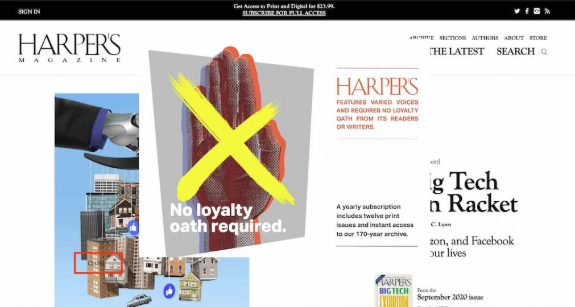
(Harper’s website) Invisible exit buttons on overlays can confuse and frustrate users.
Hierarchy
Visual hierarchy helps guide users through the interface by prioritizing information and actions. Elements such as headings, buttons, and key data points should stand out clearly. A skilled website development company uses color, size, spacing, and typography strategically to direct user attention. By structuring content effectively, users can quickly identify what is most important and navigate the system more efficiently.
- Color
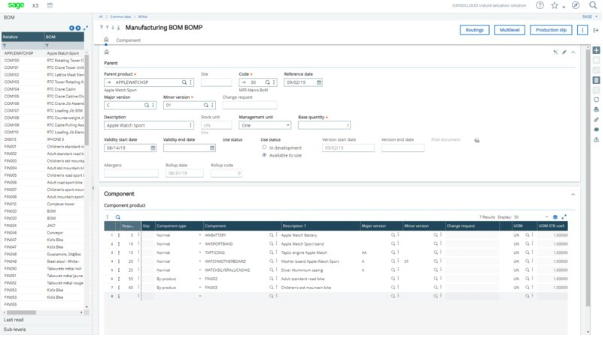
Color plays an important role in establishing visual hierarchy. Bright colors draw the eye, while muted color palettes can be used to encourage specific actions. Sage ERP system makes clever use of color in their designs.
- Size
Size is extremely important in UI design, especially when establishing visual hierarchy. The larger the element, the more noticeable it will be. Smaller elements are usually considered less important. Therefore, as designers, we strive to make important elements (headlines, CTAs, etc.) large and clear.
- Font
Experiment with different sizes, weights, and styles of fonts to establish visual hierarchy. What you should look at in this regard is the approach taken by Odoo.
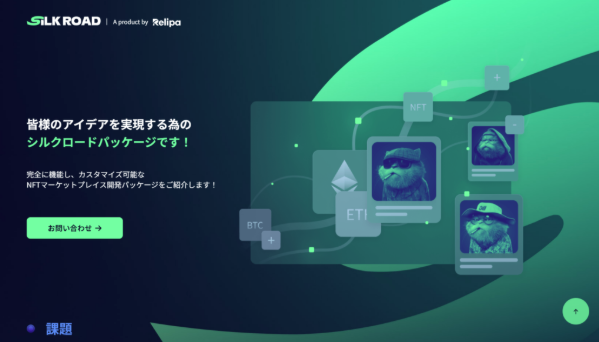
(Relipa’s Silkroad) Note that the main headings are well-explained, and the two main words (“Authentic” and “CRM”) are in bold to emphasize the message. Also, the font size of the CTA is small, but it is highlighted with a colored box to ensure that the user looks at the CTA after reading the headline.
- Negative Space
Remember to give your elements adequate white space. Having negative space instead of cramming everything on the screen allows the important elements to stand out more. Swagger makes great use of negative space on the main page of their website.
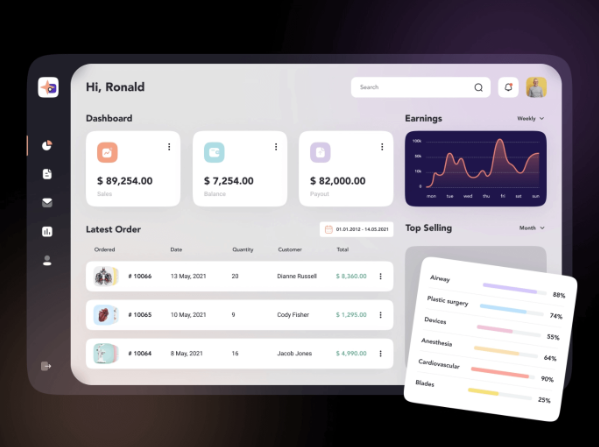
This ERP system makes effective use of negative space to enhance different functions and key messages. Nick Kamporis, user experience and user interface designer, says, “The universe is everyone’s friend. Leverage the laws of proximity to help users navigate your page visually, more than any other design element. It is also important, so please pay attention to the gap.”
Flexibility
Brooke Cowling, co-founder and CMO of Digital of Things, said, “Flexibility means the ability to respond to different customer intent, not just linear progression. It’s important.”Flexibility is therefore a key principle in user interface design, adapting to any situation, from your grandfather’s computer to your son’s latest iPad, and using shortcuts to speed up user interaction. Flexibility should not only be easy for new users to learn but also provide accelerators to speed up the process for experienced users. It is important to ensure that the product can be used flexibly and efficiently by all users, from beginners to experts. Here are some examples of flexible UI design:
- One-click shortcuts for common actions
- Advanced search functionality
- Built-in filter bar
Accessibility
Designing your website to accommodate all users is extremely important. According to the World Health Organization (WHO), approximately 285 million people are visually impaired, between 110 million and 190 million adults have severe mobility disabilities, and 360 million adults have severe mobility disabilities. has a hearing impairment.”The design process introduces a set of constraints to consider,” says Jesse Hausler, Principal Accessibility Specialist at Salesforce. When designing your product or website, make sure it meets the requirements of WCAG (Web Content Accessibility Guidelines). Here are some simple ways to incorporate accessibility principles into your product design:
- Use the WebAim Color Contrast Checker to check for high color contrast
- Make sure all images have corresponding alt attributes
- Ask yourself if users can easily navigate to your website using the tab key on their keyboard.
UI/UX Design Strategy for An Easy-to-use Business System for Employees
From a high-level perspective, designing an enterprise product isn’t much different than building a basic app. However, when you look into the details, it becomes clear that enterprise applications such as Oracle ERP have many layers of complexity. In layman’s terms, ERP can be viewed as a collection of small applications that are interconnected. These smaller applications are merged into one ecosystem to ensure seamless workflows across departments—something a professional website development company must carefully architect.
Fortunately, the core process of ERP design is similar to designing any other product. One important difference is that multiple processes often need to run simultaneously. This can be a challenge for the design team, especially in large-scale enterprise environments. Therefore, many organizations choose to collaborate with a skilled website development company and even add a DesignOps specialist to better manage design consistency, workflows, and scalability across the system.
Sympathy
A lot of design work starts here, but there are pitfalls. End users are not always clearly defined groups. Considering that ERP systems are used by multiple departments within large organizations, it is necessary to understand the needs of all employees. In other words, empathy is essential. A user-centered mindset is something every experienced website development company prioritizes when designing enterprise systems.
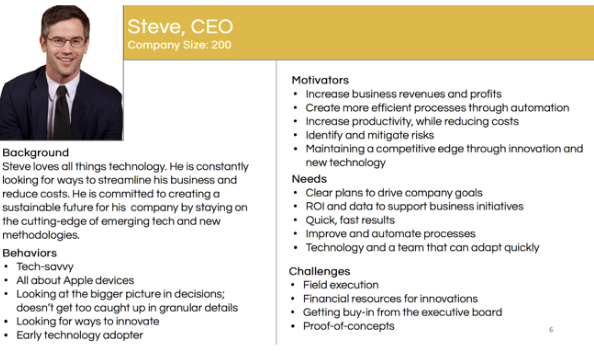
A solid starting point is to define user personas. Grouping users by job category is a practical approach, ensuring reliable segmentation. However, due to the complexity of enterprise systems, personas should not only be based on behavior but also on responsibilities and workflows. A professional website development company will often go deeper into role-based segmentation to create more accurate UX strategies. Example:
Conduct an interview
To truly empathize with ERP users, conducting in-depth interviews (IDIs) is essential. These interviews provide valuable qualitative insights into user behavior, expectations, and pain points. While surveys and analytics are useful, interviews offer a deeper understanding of real user needs. Many organizations partner with a website development company to structure and execute these research activities effectively.
Utilize quantitative methods
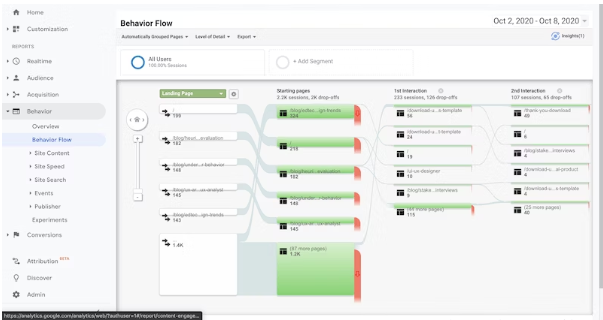
Organizations developing ERP systems often have access to large amounts of data from existing platforms. This data can reveal patterns in user behavior and system usage. By leveraging analytics, teams can identify bottlenecks and opportunities for improvement. A data-driven website development company will combine both qualitative and quantitative insights to optimize UX design.
Consider an investigation depending on the situation
Contextual research is particularly valuable in enterprise UX design. Users are not always aware of their own workflows or inefficiencies. By observing users in real working environments, designers can uncover hidden challenges and opportunities. A strategic website development company often conducts contextual research to ensure that the final system aligns with real-world usage scenarios.
Competitive research
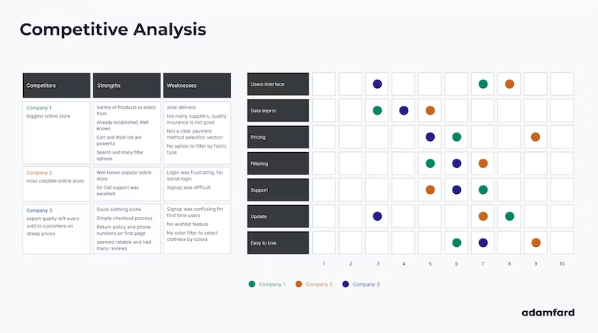
ERP systems often consist of multiple tools handling different business processes. To create a cohesive product, it is important to analyze competitors and identify gaps in the market. Competitive research helps define a clear strategy and ensures that the product delivers superior value. This is a standard practice followed by any forward-thinking website development company.
In-house workshop
Since ERP users are diverse, internal workshops are essential to align stakeholders. These workshops help define workflows, system logic, and functional requirements. A collaborative approach—often facilitated by a website development company—ensures that all perspectives are considered and integrated into the design process.
Define
Once sufficient data has been gathered, the next step is to clearly define the problem. This stage transforms research insights into actionable design goals. A structured approach by a website development company ensures that the team focuses on solving the right problems efficiently.
UX research
Research remains a continuous process throughout the design lifecycle. During the definition phase, it becomes even more critical. The right combination of research methods helps teams prioritize features and avoid unnecessary complexity. A professional website development company ensures that research is not overlooked at any stage.
Integrate research insights
After gathering insights, it is important to translate them into tangible outputs such as personas, empathy maps, and user journeys. These artifacts guide the entire design and development process. A detail-oriented website development company ensures that insights are effectively integrated into system design.
Idea generation
Once the problem is clearly defined, the next step is to explore solutions. Ideation workshops, brainstorming sessions, and early sketches help generate innovative ideas. A creative website development company encourages collaboration and rapid iteration during this phase.
Prototype and test
ERP systems are inherently complex and modular, requiring extensive wireframing, prototyping, and testing. This ensures that every workflow is optimized for usability. Many teams use tools like Figma to create interactive prototypes. A reliable website development company uses these tools to validate ideas early, reducing risks and improving the final product.
Iteration is also a critical part of the process. Even after deployment, continuous improvements are necessary to adapt to changing business needs.
Examples of UX design ideal for business systems
Slack
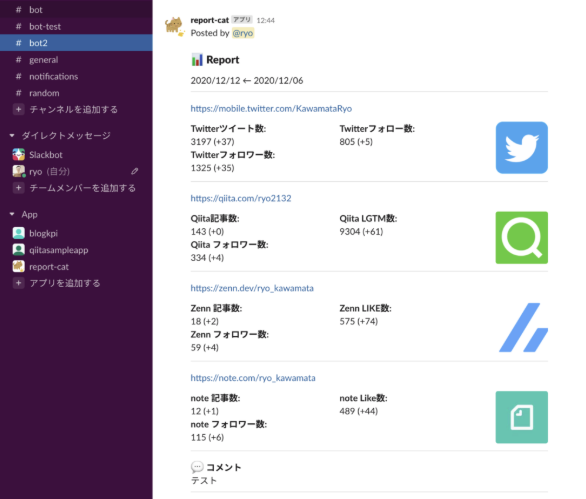
Slack is an office collaboration suite for businesses that helps streamline internal communication. Coachmarks are provided to guide users through the operation of the software to ensure a smooth introduction. Additionally, a dedicated Slackbot is available that also functions as a customer center chatbot and provides support when users need help.
Excellent UI design for school ERP software from Edunext Technologies
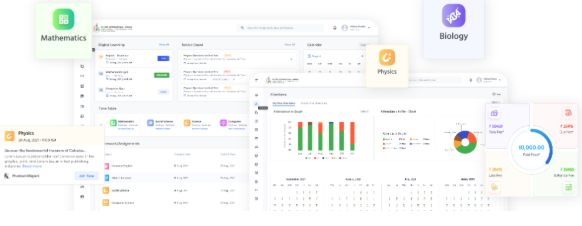
Edunext is a school ERP software that allows educational institutions to manage various aspects of their daily operations. Because schools have multiple stakeholders, Edunext introduces role-based access controls to keep data safe and clear throughout the software. In other words, parental features and modules are not visible to teachers and students, and students should not be required to view modules such as staff attendance and accounts. This makes it easier for all users to understand the software and its features. Edunext Technologies school ERP software UI design screen
Summary and outlook
Ultimately, an employee-friendly business system is essential for maximizing ERP value—improving processes, communication, cost efficiency, and overall performance. UX design plays a key role in achieving these outcomes by ensuring clarity, intuitive navigation, and familiar interaction patterns that enhance usability and adoption. Partnering with a professional website development company helps businesses design systems that are both powerful and easy to use.
With over 7 years of experience, Relipa has established itself as a trusted website development company, delivering high-quality web application solutions tailored to business needs. Our team combines strong technical expertise with modern design approaches to ensure fast delivery, reliability, and user-centric systems.
If you are looking for a reliable partner to support your next project, let’s connect and discuss how we can help.
Relipa Software
Relipa Co., Ltd. is a Vietnam-based software development company established in April 2016. After two years of growth, our Japanese branch – Relipa Japan – was officially founded in July 2018.
We provide services in MVP development, web and mobile application development, and blockchain solutions. With a team of over 100 professional IT engineers and experienced project managers, Relipa has become a reliable partner for many enterprises and has successfully delivered more than 500 projects for startups and businesses worldwide.
