
NFT games have changed how digital assets can be owned, exchanged, and used inside gaming ecosystems. For businesses exploring this model, the real challenge is not simply creating NFTs, but choosing the right blockchain development solutions.
Why are NFT games attracting attention from a Blockchain development perspective?
From a blockchain development company’s perspective, NFT games became popular because they introduced practical use cases for blockchain beyond cryptocurrency. By combining gaming with digital ownership, smart contracts, and token-based transactions, NFT games showed how blockchain could be integrated into products that users interact with directly.
Digital ownership creates new value
Unlike traditional games, where in-game assets usually remain under the publisher’s control, NFT games can allow selected characters, items, or collectibles to exist as blockchain-based assets.
This gives businesses new ways to build ownership models, digital marketplaces, and player-driven economies around game content.
Blockchain expands the game ecosystem
The appeal of NFT games also comes from their ability to connect multiple blockchain functions within one product, including smart contracts, wallets, asset transactions, and marketplaces.
For blockchain development companies, this makes NFT gaming a clear example of how blockchain can support real product features rather than functioning as a standalone technology. The key is to apply blockchain only where it creates meaningful value for both users and the business.
For businesses entering this market, the right blockchain development solutions can help turn digital ownership into practical product features.
How Blockchain development solutions supports NFT games
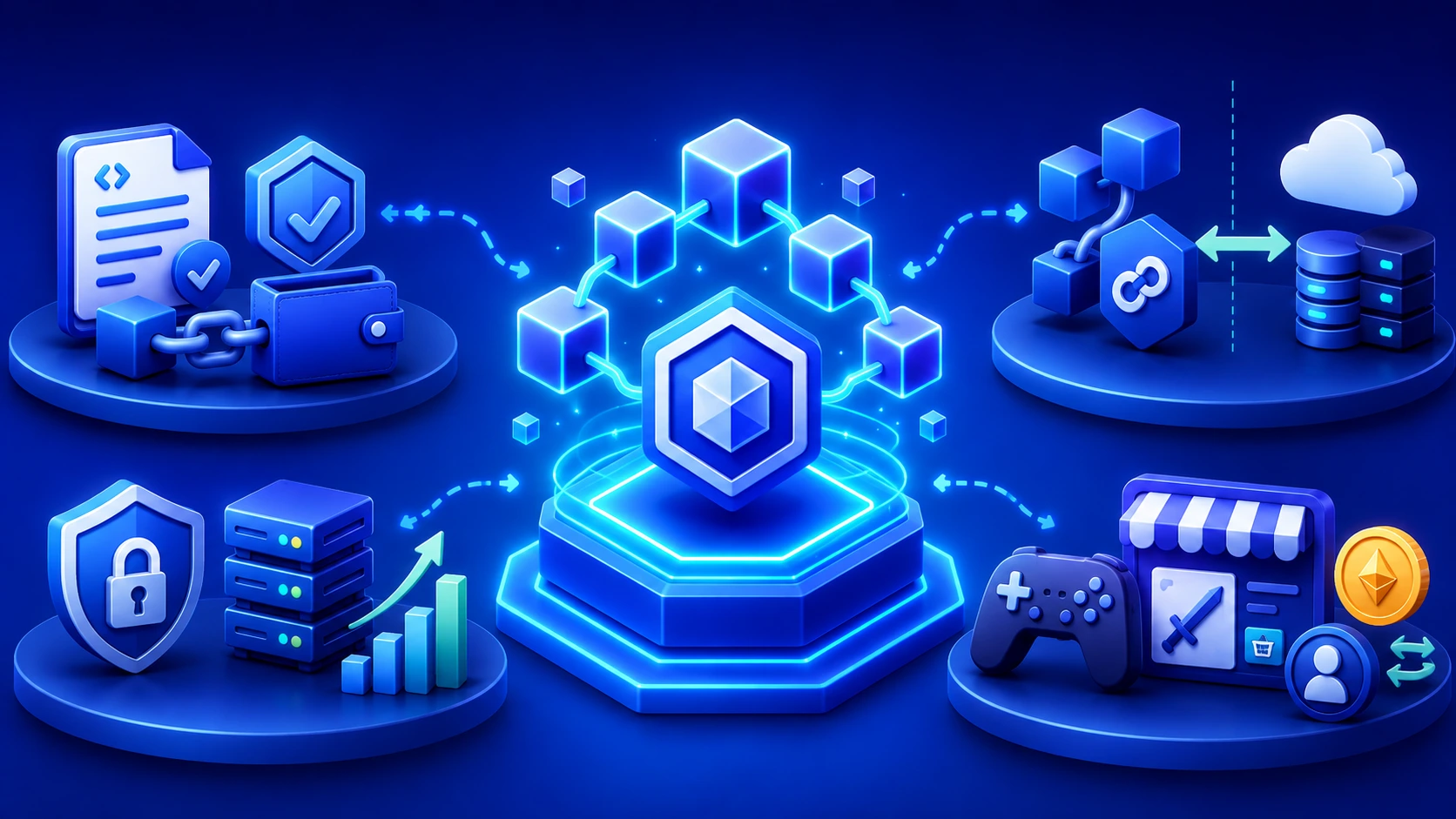
Building an NFT game involves much more than minting digital assets. A blockchain based gaming product may need to connect smart contracts, wallets, game systems, marketplaces, databases, APIs, and traditional backend infrastructure.
Smart contracts and Blockchain infrastructure
Smart contracts can support functions such as NFT creation, asset transfers, marketplace transactions, token rewards, and ownership verification.
Blockchain can also provide transparent records showing how selected digital assets are created and transferred.
From a development perspective, one of the most important decisions is determining which activities should take place on chain and which should remain off-chain.
Well-designed blockchain development solutions can help integrate smart contracts, wallets, marketplaces, and backend systems into one reliable architecture.
Putting too many game interactions on a blockchain may increase transaction costs and affect performance. Keeping too much information off-chain, on the other hand, may reduce the benefits that blockchain is intended to provide.
Balancing performance, security, and scalability
Security is another key consideration. Blockchain itself does not make an NFT game automatically secure. Smart contract vulnerabilities, wallet risks, insecure APIs, and poorly designed access controls can still create serious problems.
Effective blockchain development solutions therefore need to balance blockchain architecture with performance, security, scalability, and user experience.
What can businesses learn from Play-to-Earn and Axie Infinity?
Play-to-Earn became one of the most recognizable models during the first major wave of NFT gaming.
Instead of playing only for entertainment, users could receive tokens or digital assets through gameplay and potentially trade those assets within a blockchain-based economy.
Sustainable blockchain development solutions should support gameplay and long-term user engagement rather than depend mainly on token rewards.
Axie Infinity and the rise of Play-to-Earn
Axie Infinity became one of the best-known examples of this model. The game combined digital creatures, NFT ownership, blockchain transactions,and token-based rewards within one ecosystem.
Its rise helped demonstrate how blockchain could support digital ownership and new economic models in gaming.
Businesses interested in the early Play-to-Earn model can also read: Axie Infinity and Ponzi Scheme – Play More, Earn More?.
The shift toward sustainable game economies
At the same time, the evolution of Play-to-Earn also revealed an important lesson: financial incentives alone are not enough to sustain a game.
Businesses developing NFT games need to consider the relationship between gameplay, asset supply, user demand, transaction costs, and token economics. If players participate mainly because of financial rewards, maintaining the ecosystem may become difficult when market conditions change.
The focus should therefore move from simply asking “How can players earn from the game?” to “How can blockchain create meaningful and sustainable value for players?”
What should businesses consider before developing an NFT games?
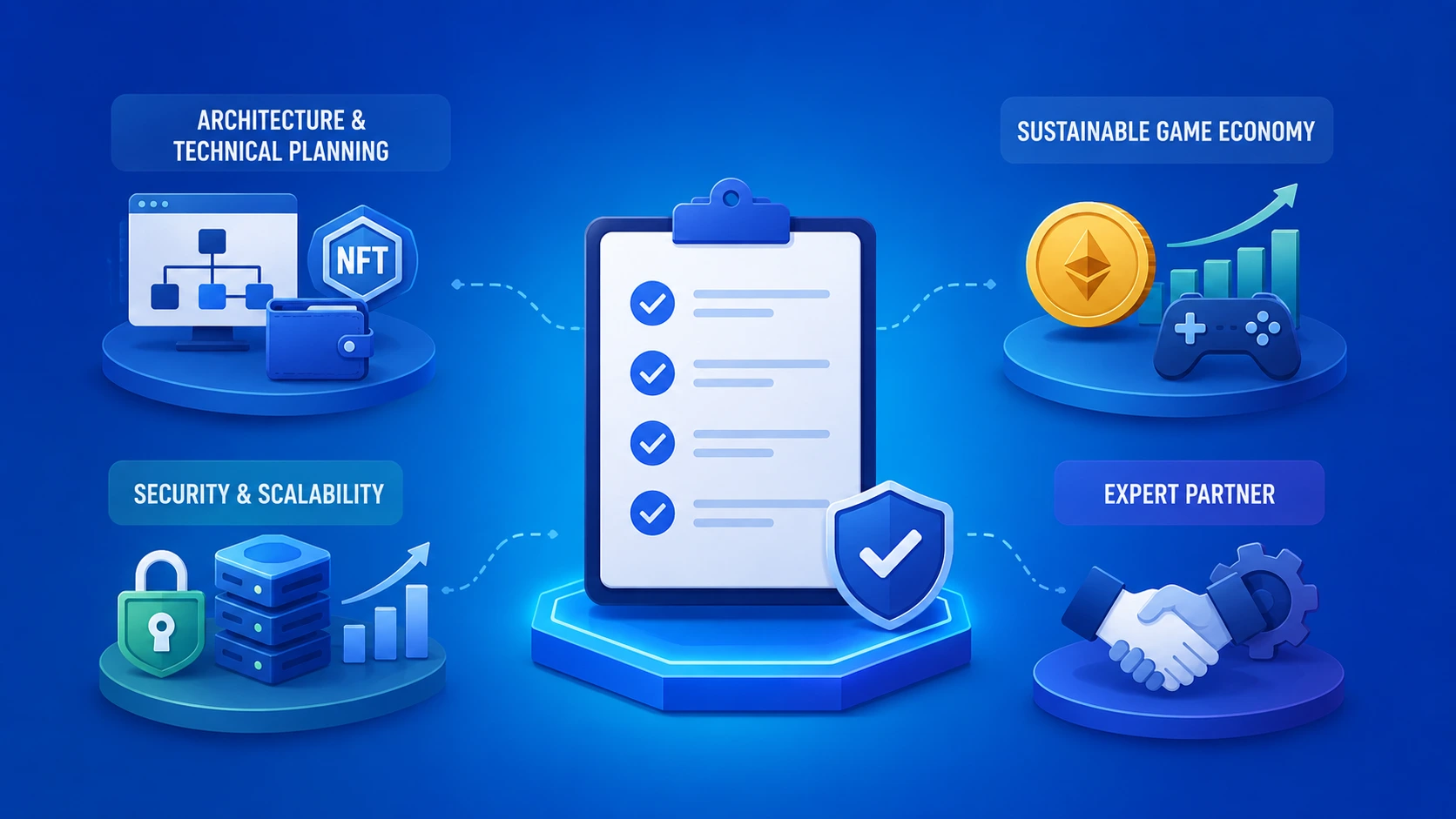
Before starting an NFT games development project, businesses need to define clearly how blockchain will contribute to the product rather than treating it as a feature that must be added by default.
The first consideration is product architecture. Businesses need to determine which digital assets should be managed on chain, which activities can remain within the traditional game backend, and whether features such as tokens, wallets, or NFT marketplaces are truly necessary.
Choosing the right blockchain development solutions can help businesses align these technical decisions with long-term product requirements.
Security and scalability also need to be considered from the beginning. Smart contracts, wallet integrations, APIs, and blockchain transactions must work reliably as the number of users and digital assets grows. Poor architecture at the early stage can make the system expensive to maintain or difficult to scale later.
Businesses should also consider the sustainability of the game economy. NFT ownership and token rewards can create new opportunities for player engagement, but they need to support the gameplay itself rather than becoming the only reason users participate.
For companies without an experienced blockchain team, professional blockchain development solutions can help connect these technical and business requirements into a more practical implementation plan.
The goal is not simply to build an NFT game, but to create a product in which blockchain provides measurable value to both users and the business.
The right blockchain development solutions can also help businesses reduce integration risks and support future system expansion.
Relipa’s blockchain development solutions can support businesses in turning blockchain concepts into practical and scalable products.
NFT Game trends and future outlook
The NFT gaming market is gradually moving beyond the early Play-to-Earn model. Instead of focusing mainly on token rewards and speculative trading, newer projects are placing greater emphasis on gameplay quality, sustainable economies, and digital ownership that provides real utility.
As the market evolves, blockchain development solutions will increasingly focus on usability, scalability, and real value for both players and businesses.
Another important trend is making blockchain less visible to players. Features such as embedded wallets, simplified onboarding, and more scalable infrastructure can reduce the friction traditionally associated with Web3 games. This allows users to interact with blockchain-based assets without needing to understand the technical processes behind them.
At the same time, the role of NFTs is also becoming more selective. Rather than turning every in-game item into a token, developers are increasingly focusing on assets where blockchain can add clear value, such as ownership, tradability, identity, or access within a broader digital ecosystem.
From a blockchain development perspective, the future of NFT games will depend less on simply adding NFTs and more on how effectively blockchain supports ownership, transactions, user experience, and long-term engagement. For businesses, the key is to apply blockchain only where it creates clear value for both the product and its users.
Summary
NFT games show how blockchain can reshape digital ownership, transactions, and in-game economies, but successful implementation depends on more than simply adding NFTs or tokens. Businesses need to consider architecture, security, scalability, user experience, and the sustainability of the game economy from the beginning. As NFT gaming evolves, blockchain development solutions will play an important role in turning blockchain features into practical, scalable, and sustainable products.
With the right blockchain development solutions, companies can turn blockchain concepts into practical gaming products that deliver real value to users while supporting longterm business growth.
Relipa
Relipa is a Vietnam-based software development company established in April 2016. After two years of growth, our Japanese branch – Relipa Japan – was officially founded in July 2018.
We provide services in MVP development, web and mobile application development, and blockchain solutions. With a team of over 100 professional IT engineers and experienced project managers, Relipa has become a reliable partner for many enterprises and has successfully delivered more than 500 projects for startups and businesses worldwide.
