
Legacy system modernization is the process of updating or replacing a company’s outdated software applications, IT infrastructure, and platforms with modern technologies. It’s not just about installing new software; it’s a strategic transformation aimed at enhancing business agility, efficiency, and competitiveness. The goal of Legacy System Modernization is to move away from monolithic, difficult-to-maintain systems toward more flexible, scalable, and secure architectures that can support current and future business objectives.
Legacy systems are typically characterized by a number of tell-tale signs. They often incur high maintenance costs and accumulate significant technical debt, with some organizations spending 60-80% of their IT budgets just on upkeep. This leaves few resources for innovation. These systems often lack the scalability and flexibility needed to respond to changing market demands, making it difficult to add new features or integrate with modern services. Furthermore, they can pose serious security vulnerabilities due to unsupported software and a lack of modern security protocols. Finding talent to manage old programming languages becomes increasingly difficult and expensive, compounding the operational challenges that Legacy System Modernization aims to solve.
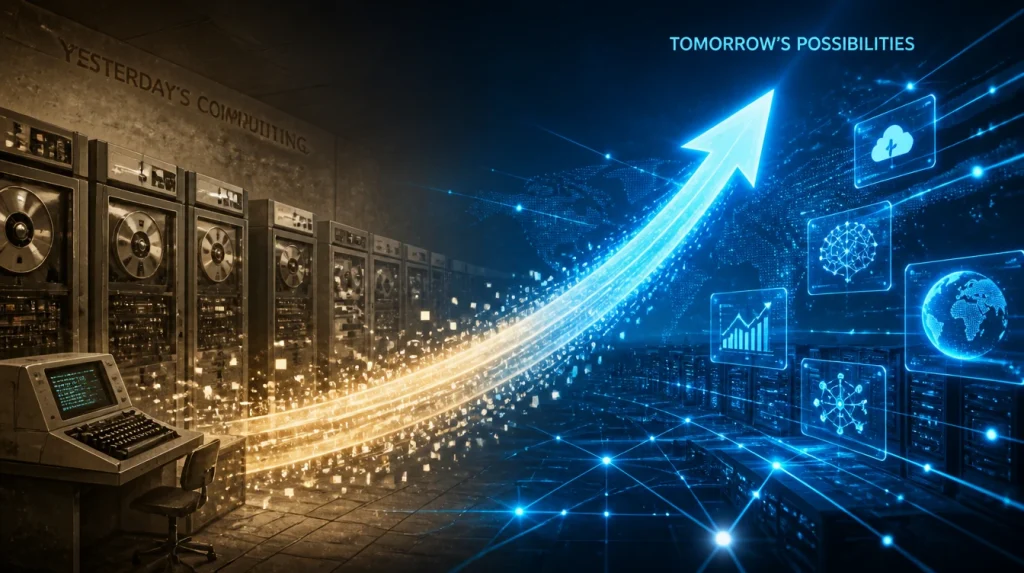
The business imperative for modernization is compelling and multifaceted. By updating legacy software, companies can significantly improve operational efficiency and reduce long-term costs. Modern systems offer enhanced security and make it easier to comply with evolving regulatory standards like GDPR and HIPAA. Perhaps most importantly, Legacy System Modernization fosters greater agility, enabling a faster time-to-market for new products and services. This leads to better customer and employee experiences and provides access to transformative technologies like cloud computing, artificial intelligence (AI), and machine learning (ML), which are essential for innovation in the modern era.
The Critical Need for Legacy Software Modernization
Ignoring the need for legacy software modernization is a high-risk proposition. These aging systems expose businesses to a range of threats that can disrupt operations and damage reputation. On the other hand, proactively addressing this technical debt through Legacy System Modernization can unlock significant strategic advantages, positioning a company for long-term success. The decision to modernize is not merely a technical upgrade but a foundational business strategy.
The risks associated with outdated systems are severe. Operational downtime is a constant threat, as fragile, brittle systems are prone to frequent outages that can halt business activities. Security breaches are another major concern; legacy software often contains unpatched vulnerabilities that are prime targets for cyberattacks. As regulations evolve, these systems can lead to compliance failures, resulting in hefty fines and legal trouble. Furthermore, businesses often find themselves in a state of vendor lock-in, dependent on expensive, proprietary technology from providers who may no longer offer robust support, driving maintenance costs even higher.
Conversely, the strategic advantages of Legacy System Modernization are transformative. It serves as a catalyst for innovation, laying the groundwork for adopting emerging technologies like the Internet of Things (IoT) and AI. A modern IT environment allows businesses to be more responsive to market changes and evolving customer expectations. It also helps in attracting and retaining top talent, as skilled developers and IT professionals are more inclined to work with contemporary tech stacks. From a financial perspective, modernization enables a shift from a capital-intensive (CapEx) model of managing on-premise hardware to a more flexible operational expenditure (OpEx) model with cloud-based solutions, optimizing costs and improving financial agility. Businesses that modernize simply cannot afford to be left behind.
Exploring Effective Legacy System Modernization Strategies
When embarking on a legacy modernization journey, it’s crucial to understand that there is no one-size-fits-all solution. The right approach depends on a variety of factors, including business goals, budget, risk tolerance, and the specific state of the legacy system. A widely recognized framework known as the “7 Rs” outlines the common strategic approaches organizations can take to tackle their Legacy System Modernization initiatives.
Rehost (Lift and Shift)
This strategy involves moving an application from its current on-premise environment to a modern infrastructure, typically the cloud, with minimal to no changes to the underlying code. It’s akin to moving a house to a new location without renovating it.
Pros: Rehosting is the fastest and often least expensive approach, causing minimal disruption to operations.
Cons: It does little to address the core architectural problems of the legacy system and offers limited opportunities to leverage cloud-native benefits like scalability and serverless computing. Businesses adopting cloud migration strategies often rely on solutions from Google Cloud Platform (GCP) for scalable infrastructure and migration support.
Replatform
Slightly more involved than rehosting, replatforming involves making minor modifications to an application’s code to take better advantage of the new cloud platform. This could mean, for example, moving from a self-managed database to a managed database service offered by a cloud provider.
Pros: This approach can yield better performance and some cloud-native benefits without the complexity of a full rewrite.
Cons: The architectural improvements are still limited, and it doesn’t resolve deeper issues within the application’s codebase.
Refactor/Re-architect
This is a more intensive approach that involves restructuring and optimizing existing code without changing its external behavior. Re-architecting takes this a step further by significantly altering the application’s architecture, often to adopt a microservices model. This breaks down a large, monolithic application into smaller, independent services.
Pros: This Legacy System Modernization strategy delivers significant gains in performance, scalability, and agility, effectively future-proofing the application.
Cons: It is a complex, costly, and time-consuming process that requires specialized expertise.
Repurchase (Replace)
In some cases, the best strategy is to discard the legacy system entirely and replace it with a new solution, often a commercial off-the-shelf (COTS) or Software-as-a-Service (SaaS) product.
Pros: This provides immediate access to modern features, eliminates the burden of maintenance, and shifts responsibility to the vendor.
Cons: Challenges include complex data migration, potential loss of custom functionality developed over years, and dependence on the new vendor.
Retain
Sometimes, the most sensible decision is to do nothing. If a legacy system still serves its business purpose, is not a significant risk, and the ROI for modernizing it is low, it may be best to keep it in place.
Pros: There are no immediate costs or disruptions associated with this approach.
Cons: The organization must continue to accept the risks and limitations of the legacy system, which may worsen over time.
Retire
This strategy involves decommissioning a legacy system that is no longer needed. This often happens when its functionality has been absorbed by other systems or is simply obsolete.
Pros: Retiring a system saves money on maintenance and support and reduces the overall complexity of the IT environment.
Cons: This requires careful planning to ensure data is properly archived and that all business processes dependent on the system are successfully transitioned.
Rebuild
The most drastic approach, rebuilding involves rewriting the application from scratch using modern technologies and architectures. This is often chosen when a legacy system is so outdated or broken that no other approach is viable.
Pros: The result is a fully optimized system tailored to current business needs, completely free of technical debt.
Cons: Rebuilding is the most expensive, highest-risk, and longest-timeline option of all the Legacy System Modernization strategies.
A Step-by-Step Approach to Legacy System Modernization
A successful Legacy System Modernization project is not a chaotic rush but a well-orchestrated process. Following a structured, step-by-step approach is essential to mitigate risks, manage costs, and ensure the final outcome aligns with strategic business objectives. This phased methodology allows for course correction and ensures that stakeholders are aligned at every stage of the journey.
Step 1: Comprehensive Assessment and Discovery
The first phase is about understanding the current state. This involves a deep evaluation of the existing legacy systems, including their architecture, code quality, dependencies, and overall business value. It’s critical to identify key stakeholders from both business and IT departments to gather comprehensive requirements. A thorough risk analysis and cost-benefit assessment should be performed to build a strong business case. Specialized tools like application portfolio analysis and cloud readiness assessments can provide data-driven insights to inform the modernization strategy.
Step 2: Strategy Definition and Roadmap Creation
With the insights from the assessment phase, the next step is to select the most suitable modernization strategy—or a combination of strategies—from the “7 Rs.” This decision should be directly tied to the business goals identified earlier. Clear objectives, key performance indicators (KPIs), and success metrics must be defined to measure progress and ultimate success. A detailed project roadmap is then created, outlining the different phases, realistic timelines, and necessary resource allocation. Applications are prioritized for modernization based on their business impact and the feasibility of the project.
Step 3: Pilot and Proof of Concept (POC)
Before committing to a full-scale modernization, it is wise to start with a smaller, less critical application or a single module of a larger system. This pilot project or POC serves to test the chosen strategy and validate technology choices and architectural decisions in a low-risk environment. It provides an invaluable opportunity to gather lessons learned and refine the approach. A successful POC can also help build momentum and secure buy-in from stakeholders for the broader Legacy System Modernization initiative.
Step 4: Execution and Implementation
This is where the core modernization work takes place. Depending on the chosen strategy, this phase may involve migrating data, refactoring code, integrating new systems, or rebuilding applications. Throughout this process, robust testing—including unit, integration, performance, and security testing—is paramount to ensure quality. Effective change management is also crucial to ensure that users across the organization are prepared for the new system. Project durations can vary significantly; a simple rehosting might take a few weeks, while a complete rebuild could span over a year.
Step 5: Post-Modernization Optimization and Support
The work doesn’t end when the new system goes live. Continuous monitoring of the modernized system’s performance and security is essential to ensure it operates as expected. Ongoing maintenance, support, and a plan for continuous improvement are necessary to keep the system up-to-date and aligned with business needs. Finally, it’s important to measure the actual return on investment (ROI) against the initial projections to demonstrate the value of the Legacy System Modernization effort and inform future projects.
Key Considerations for Legacy Modernization Software and Tools
Successful legacy system modernization hinges not only on the right strategy but also on leveraging the right software and tools. The modern technology landscape offers a powerful ecosystem of platforms and solutions designed to accelerate development, enhance security, and ensure scalability. Understanding these tools is key for any organization planning a Legacy System Modernization initiative.
Cloud Platforms and Services
Major cloud providers like Amazon Web Services (AWS), Microsoft Azure, and Google Cloud Platform (GCP) are at the heart of most modernization efforts. They offer a vast array of services that provide the foundation for modernized applications, including Infrastructure-as-a-Service (IaaS), Platform-as-a-Service (PaaS), and serverless computing (FaaS). These platforms allow businesses to offload the management of physical hardware and gain access to managed databases, advanced analytics, and AI/ML services, enabling them to build highly scalable and resilient applications.
Automation and DevOps Tools
DevOps practices are critical for achieving the agility promised by modernization. Automation tools are the engine of DevOps, enabling continuous integration and continuous delivery (CI/CD) pipelines. Tools like Jenkins, GitLab CI, and GitHub Actions automate the process of building, testing, and deploying code, which significantly speeds up development cycles. Infrastructure as Code (IaC) tools such as Terraform and Ansible allow teams to manage and provision infrastructure through code, ensuring consistency and repeatability across environments.
API Management and Integration Platforms
During a phased modernization, new and legacy systems must coexist and communicate seamlessly. Application Programming Interfaces (APIs) are the bridges that make this possible. API management platforms like MuleSoft, Apigee, and Kong provide tools to design, secure, and manage APIs at scale. This is particularly important when adopting a microservices architecture, where an application is broken down into many small, independent services that communicate via APIs.
Data Migration and Transformation Tools
Moving data from legacy systems to modern databases is one of the most complex and critical aspects of modernization. Data can be trapped in outdated formats and structures, making migration a significant challenge. ETL (Extract, Transform, Load) tools and data warehousing solutions are essential for this process. They help extract data from the source system, transform it into a compatible format for the new system, and load it securely. Ensuring data integrity, security, and proper validation throughout the migration process is paramount to avoid data loss or corruption.
Monitoring and Observability Solutions
Once a system is modernized, it’s crucial to have visibility into its health and performance. Modern monitoring and observability solutions provide real-time insights that go beyond simple uptime checks. Application Performance Monitoring (APM) tools, logging platforms, and distributed tracing systems help teams understand how their applications are behaving, identify bottlenecks quickly, and troubleshoot issues before they impact users. This proactive approach is essential for maintaining the reliability and performance of modernized systems.
Choosing the Right Legacy System Modernization Companies
Embarking on a legacy modernization journey is a significant undertaking, and the partner you choose can be the difference between a successful transformation and a costly failure. Selecting from the many Legacy System Modernization companies requires careful evaluation of their expertise, processes, and alignment with your business goals. A thorough vetting process will ensure you find a partner who can navigate the complexities of your project and deliver tangible business value.
Overcoming Challenges in Your Legacy Modernization Journey
While the benefits of legacy modernization are substantial, the path is often fraught with challenges. From deeply rooted technical complexities to organizational resistance, these hurdles can derail a project if not managed proactively. Understanding these common obstacles and having a clear strategy to address them is crucial for a successful Legacy System Modernization transformation.
Frequently Asked Questions About Legacy System Modernization
What is the typical ROI for legacy system modernization?
The return on investment for Legacy System Modernization can be substantial, though it varies based on the project’s scope and goals. Many organizations report triple-digit ROI, with some studies showing returns of 288%–362% within three to five years. ROI is driven by several factors, including reduced IT maintenance and infrastructure costs, which can be cut by 30-50%, increased operational efficiency, and faster time-to-market for new products. Modernization also enables new revenue streams by allowing businesses to leverage data and integrate with modern technologies like AI.
How long does a typical modernization project take?
Timelines for legacy modernization projects vary greatly depending on the complexity of the system, the amount of data to be migrated, and the chosen strategy. A simple rehosting or “lift and shift” project might be completed in a few months. More complex projects, such as refactoring or replatforming, can take anywhere from six to twelve months. A complete rebuild or re-architecture of a core enterprise system is the most time-intensive, often taking 12 to 24 months or even longer.
Is it always better to modernize than to replace?
Not necessarily. The decision between modernizing an existing system (e.g., refactoring or re-architecting) and replacing it with a new solution (e.g., a SaaS product) depends on a careful analysis of business context, cost, and risk. Modernization may be better if the legacy system contains valuable, unique business logic that would be difficult to replicate. Replacement is often a better choice if a suitable off-the-shelf solution exists that meets most business needs and the cost of custom development is too high. A thorough assessment is needed to determine the best path forward.
What are the biggest risks associated with modernization?
The primary risks include budget overruns, project delays, and business disruption. Data migration is a significant risk area, with potential for data loss or corruption if not managed carefully. Another major risk is a lack of user adoption due to resistance to change. Finally, there is the technical risk that the new system may not perform as expected or integrate properly with other business-critical applications.
How can we ensure data security during and after modernization?
Ensuring data security requires a multi-layered approach. During modernization, data should be encrypted both in transit and at rest. Strict access controls should be implemented to ensure only authorized personnel can access sensitive information. After modernization, best practices include regular security audits, continuous monitoring for threats, and adherence to a “security-by-design” principle where security is integrated into every phase of the development lifecycle. Compliance with regulations like GDPR or HIPAA must be validated throughout the process.
What role does cloud play in legacy system modernization?
The cloud is a fundamental enabler for most Legacy System Modernization strategies. It provides the scalable, flexible, and cost-efficient infrastructure needed to host modernized applications. Cloud platforms offer a wide range of managed services (e.g., databases, analytics, AI/ML) that accelerate development and reduce operational burden. By migrating to the cloud, organizations can shift from a capital-intensive (CapEx) to an operational expenditure (OpEx) model, paying only for the resources they use and gaining the agility to scale on demand.
Relipa Software
Relipa Co., Ltd. is a Vietnam-based software development company established in April 2016. After two years of growth, our Japanese branch – Relipa Japan – was officially founded in July 2018.
We provide services in MVP development, web and mobile application development, and blockchain solutions. With a team of over 100 professional IT engineers and experienced project managers, Relipa has become a reliable partner for many enterprises and has successfully delivered more than 500 projects for startups and businesses worldwide.
