
In the fast-paced world of offshore software development, software testing is far more than a routine check; it’s the backbone of product quality and reliability. While some companies mistakenly view testing as an avoidable expense, experienced offshore software development teams know that early bug detection is the only way to save budget and protect brand reputation in the long run.
In this comprehensive guide, Relipa will explain in detail the purpose, process, and importance of software testing, along with the vital role of the tester. Read on to discover how high-quality testing transforms your digital vision into a robust, high-performing reality.
What is software testing?
At its core, software testing is the systematic process of verifying a product’s quality and functionality while proactively identifying and fixing technical issues. In the realm of offshore software development, this stage acts as a vital bridge between the initial design and the final delivery, ensuring that the software strictly adheres to all user requirements and technical specifications.
By prioritizing comprehensive testing, we don’t just find bugs; we enhance the overall stability of the software, providing global users with a more reliable and seamless digital experience.
Software testing happens at different points while creating software. There are specific times when this testing occurs:
- Unit Testing: Here, we check if each part of the software works correctly. Developers do this right after writing their code. These tests ensure that the software’s basic functions are right.
- Integration Testing: This is where we put different parts together to see if they work right. We find out if different parts cause issues when they come together.
- System Testing: We test the whole software here to make sure it does what it’s supposed to. We check if it meets all the needs and plans.
- Acceptance Testing: In this step, the user or client checks if the software does what they want. They make sure it meets their needs.
Notably, software testing is not limited to specific stages; it is an ongoing process throughout the entire development lifecycle. By testing early, we can identify and resolve issues promptly, significantly enhancing the final product’s quality. In Agile environments, for instance, continuous testing is performed alongside every feature addition or modification to ensure consistent stability.
Purpose of software testing in offshore software development
The primary purpose of software testing is comprehensive quality assurance. In the field of offshore software development, the ultimate aim is to provide high-quality software by systematically finding and correcting bugs and defects that occur during the development process.
By prioritizing testing, teams can guarantee that the final product is not only functional but also stable and secure for the end-user.
The main software testing objectives are:
- Bug fixing: Identifying and correcting bugs and errors to ensure the software works properly.
- Functionality check: Making sure the software performs its intended functions correctly.
- Performance assessment: Evaluating how well the software performs, including measuring resource usage and response time.
- Security assurance: Identifying vulnerabilities and security issues in the software and addressing them for a safe outcome.
- Usability evaluation: Checking if the software is user-friendly and easy to use.
- Meeting requirements: Confirming that the software meets user needs and specifications.
- Unit testing: Testing individual parts of the software separately.
- Integration testing: Testing combined elements and modules.
- System testing: Checking the overall performance of the entire software.
As software grows in complexity and scale, the risk of unexpected failures increases. In the world of offshore software development, releasing a faulty product does more than just compromise user safety; it severely damages a company’s reputation and market credibility. Therefore, software testing must be viewed as a strategic necessity rather than a mere final check.
To be effective, testing should be integrated into the development process from the earliest stages. Since testing significantly impacts both schedules and budgets, a planned “test-early” approach is essential to catch defects before they escalate into costly post-release disasters. By identifying and fixing bugs promptly, teams can ensure stable operations and high-quality results.
However, it is important to recognize that while testing is an irreplaceable pillar of offshore software development, it is a risk-mitigation tool rather than a guarantee of perfection. Because no process can prove the total absence of bugs, success depends on thorough risk analysis, prioritization, and the inclusion of third-party perspectives. Borrowing “fresh eyes” helps uncover improvements that developers might overlook, ultimately ensuring the final product meets the high expectations of both developers and users.
Types of Software Testing
In the development process, there are various types of software testing, each serving a specific role in enhancing product quality. To achieve the best results, it is crucial to combine these methods into a comprehensive strategy rather than relying on a single approach.
For any offshore software development project, performing exhaustive testing across different levels is the key to ensuring stability. Below, we introduce the primary techniques used to validate every aspect of the software:
- Unit testing: tests whether individual software components or modules work correctly. It is usually done right after the developer writes the code and is commonly automated.
- Integration testing: Combine multiple components or modules and test the interaction between them. Check if the components work together correctly.
- System testing: Test whether the entire software satisfies the requested functionality. Perform tests from an external perspective of the system to verify behavior due to user operations.
- Acceptance testing: A test in which a user or client evaluates the software to see if it meets their requirements. It is done from the user’s point of view and is usually the last step.
- Regression testing: A test to ensure that existing functionality is not affected when new changes or modifications are made to the software. It helps prevent bugs from recurring.
- Performance testing: A test for evaluating software performance and capabilities. Measure resource usage, response time, and more to identify bottlenecks.
- Security testing: A test that identifies software security vulnerabilities and verifies confidentiality and data protection issues.
- Usability testing: A test that evaluates whether the software is user-friendly. Validate usability and user experience.
- Alpha and beta testing: Alpha testing is internal developer testing, and beta testing is testing by the general public. It is done to test early versions of the product and gather feedback for improvements.
These are examples of some software testing types. Choosing the right test strategy for your project’s needs and goals is important.
Specific steps in the software testing process
A software testing process consists of a structured set of steps designed to guarantee product excellence. In any offshore software development project, following these core stages is essential for maintaining consistency and high quality throughout the development cycle.
- Developing a test plan
The first step in the software testing process is developing a test plan. A test plan contains the overall plan for testing, including test scope, objectives, test strategy, test schedule, and resource allocation. A test plan is important to ensure a common understanding with developers and testers as it sets the direction of testing. - Writing test cases
Next, create a test case. Test cases define specific test items, input data, and expected results based on software functions and requirements. Test cases provide concrete steps to verify software behavior. To create test cases, it is necessary to understand the specifications and requirements of the program and to cover many test items. - Conducting the test
Once the test cases are created, the actual testing is performed. During testing, the created test cases are used to test each function and requirement of the software. Testing can be done efficiently by using test tools and automation tools. In addition, if a defect is found in the process of conducting the test, we will report the defect in detail. - Report and fix bugs
Defects found during the testing process are reported to the developer in a detailed report. Developers fix reported defects and retest. After fixing defects and performing retesting, resume testing and perform the remaining tests. This cycle repeats until all defects are fixed and the tests pass. - Test evaluation and reporting
Once the test has been completed, evaluate and report on the test. The test evaluation analyzes the test results and evaluates the quality and risks of the software. In addition, in the test report, we will report information such as test results, details of defects, test scope, and executed test cases. By doing so, we can share test results and failure status with related parties and use them to improve the quality of software.
These are the main steps in the software testing process. In it, testers play a key role in the entire software testing process, from test plan development to test execution, defect reporting, and fixing.
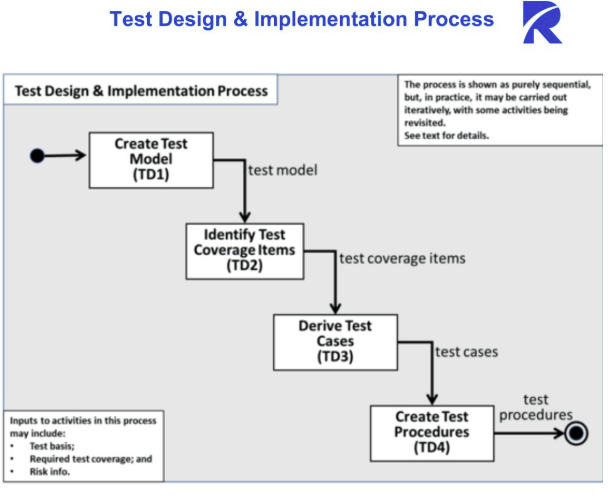
Software test process according to ISO/IEC/IEEE 29119
(Source: Translated from AGEST “ISO/IEC/IEEE 29119 SOFTWARE TESTING STANDARDS”)
Also, in software testing, there are standards. It is “ISO/IEC/IEEE 29119”. “ISO/IEC/IEEE 29119” is an international standard for software testing developed by the International Organization for Standardization (ISO). Earning the ISO/IEC/IEEE 29119 certification proves your company’s adherence to international software testing standards and processes. This builds confidence in the quality of our products and testing services from our customers and partners.
As a software development company, Relipa is ISO certified, focuses on training quality testers, and always ensures that the software development process achieves ISO standards.
Read more: Relipaは代表的な案件を通じて、多業種のお客様にとっての信頼できるパートナーになれたことを大変光栄に存じております
Who does software testing?
Successful software testing is a collaborative effort involving various specialized roles, each contributing to the product’s overall integrity. In offshore software development, a clearly defined team structure is essential to ensure that quality is maintained and communication remains seamless across all stages:
- Tester: Specialists dedicated to assessing software quality and functionality. They identify bugs, document issues, and formulate detailed test plans. Testers execute both manual and automated tests using specialized tools to ensure every corner of the software is vetted.
- Developer: Developers play an integral role in testing by performing unit and integration tests to verify the accuracy of their code. They collaborate closely with testers to resolve defects and ensure the code aligns with quality standards.
- Quality assurance (QA) team: The QA team provides strategic oversight for the entire testing process. They develop high-level test plans and strategies, aiming to enhance project quality and ensure strict adherence to quality objectives.
- End user: Participation from end users is vital for acceptance and usability testing. By evaluating the software from a real-world perspective, they help verify that the product meets practical needs and provides a seamless user experience.
- Third-party verification: Independent experts or organizations provide an objective validation of the software. Their unbiased insights into quality and security offer an additional layer of trust and technical excellence.
By collaborating harmoniously, these roles optimize testing efforts and ensure that the final output of offshore software development projects meets the highest industry standards.
10 rules to prevent bugs and optimize offshore software development costs
5 things to keep in mind in software testing
It is of paramount importance to test software in the product development cycle. Notwithstanding, there are some caveats when testing software. Here are some tips for software testing.
- Sufficiency and appropriateness of test cases
Test cases consist of specific input data and operating procedures designed to verify software functionality. To ensure high standards in offshore software development, these cases must be prepared in sufficient volume and with high-quality content. While a large number of test cases helps identify defects early, having appropriate content ensures that all software requirements are exhaustively validated. This process demands a deep understanding of project specifications and domain expertise.
- Reproducing the environment during the test
When testing software, it is important to reproduce the actual production environment. If the test environment is different from the production environment, the test results may differ from the actual operation results. Also, testing in different environments can introduce bugs and issues. Reproducing the test environment requires the appropriate tools and settings.
- Acquisition and analysis of test logs
Capturing test logs is vital during execution, as they provide a detailed record of test activities and error data. Analyzing these logs allows teams to pinpoint the root causes of bugs and performance bottlenecks. It is important to leverage specialized tools and techniques to manage these logs efficiently and extract the necessary information for improvements.
- Evaluation and reporting of test results
Once testing is complete, results must be evaluated against predefined criteria and quality targets. Detailed test and bug reports serve as an indispensable source of information, allowing developers and stakeholders to clearly understand the issues and coordinate effective fixes.
- Leverage automated testing
Adopting automated testing is a highly effective strategy for improving reproducibility and efficiency. This approach is particularly beneficial for repetitive test cases or projects involving vast amounts of data. However, successful automation requires careful tool selection, precise script creation, and consistent maintenance to be effective in the long run.
Read more: What is the difference between a core system and a business system and the relationship with ERP?
Read more: What is MVP development?
Five Rules for Preventing Bugs and Reducing Development Costs
In the competitive landscape of offshore software development, efficiency and quality must go hand in hand. By adhering to these five fundamental rules, businesses can proactively prevent bugs and significantly optimize their development budget:
- Appropriate requirements definition and specification formulation: Establish clearer requirements and software specifications. Bugs and misunderstandings are minimized when development is guided by accurate specifications.
- Thorough unit testing: Developers should do thorough unit testing to ensure the quality of their code. Unit tests ensure that basic functions and processes in your code work correctly.
- Continuous integration and continuous testing: Adopt continuous integration (CI) and continuous testing (CT), and do regular integration and testing early in development. This enables early detection and correction of problems, reducing development costs.
- Risk-based test plan: Evaluate project risks and develop a risk-based test plan. Reduce the risk of introducing bugs and optimize resources by focusing testing on critical functions and high-risk areas.
- Leverage automated testing: Automate routine test cases and repetitive tests. Automated testing enables efficient test execution, reduces human error, and reduces development costs.
By following these rules, you can prevent bugs in software testing and reduce development costs.
Summary
In short, software testing is an essential foundation for developing high-quality products. While no process can provide a 100% guarantee of absolute perfection, integrating a strategic combination of risk analysis, prioritization, and third-party perspectives significantly elevates the standard of the final output.
In the competitive landscape of offshore software development, actively engaging in professional testing is a non-negotiable step to consistently meet the demands of both developers and users, ensuring a robust and high-performing result.
Relipa Software
Relipa Co., Ltd. is a Vietnam-based software development company established in April 2016. After two years of growth, our Japanese branch – Relipa Japan – was officially founded in July 2018.
We provide services in MVP development, web and mobile application development, and blockchain solutions. With a team of over 100 professional IT engineers and experienced project managers, Relipa has become a reliable partner for many enterprises and has successfully delivered more than 500 projects for startups and businesses worldwide.
