

 Copy link


AI Agent Frameworks in 2026: A Practical Guide by an AI Software Development Company
Artificial intelligence is rapidly evolving from isolated models into fully autonomous, goal-oriented systems capable of planning, reasoning, and executing multi-step tasks. At the heart of this evolution are AI agent frameworks — specialized toolkits and ecosystems designed to transform large language models (LLMs) and other AI components into agents that can act independently in real-world workflows. For businesses seeking advanced digital solutions, navigating the landscape of AI agent frameworks is essential, and aligning that choice with the capabilities of a trusted AI software development company ensures projects are both effective and scalable.
This comprehensive guide explores what AI agent frameworks are, why they matter in practice, and how leading frameworks differ in capabilities, strengths, and ideal use cases. We also share nuanced insights into how to evaluate them from an enterprise perspective — whether building internal products or working with an AI software development company partner.
What Is an AI Agent Framework?
An AI agent framework is a development environment that provides pre-built components and abstractions to build, orchestrate, and manage autonomous agents. Rather than manually wiring language models, APIs, data connectors, and tool calls together, these frameworks structure the logic needed for agents to plan, make decisions, retrieve information, interact with external systems, and execute tasks.
In essence, they bridge the gap between simple prompt engineering and fully functional intelligent systems. With an agent framework, developers can build systems that handle dynamic workflows, maintain context over interactions, and integrate across complex data sources more reliably than ad-hoc implementations.
In practical terms, these frameworks play similar roles to conventional software stacks: they provide state management, modularity, tool connectors, orchestration logic, and mechanisms for debugging and evaluation — all of which accelerate agent development and reduce engineering costs.
Why AI Agent Frameworks Matter
For businesses and technical teams, agent frameworks matter for several key reasons:
- Production Readiness: Manual prompt sequences are easy to prototype but brittle in production. Frameworks provide structured execution paths, error handling, and persistence.
- Scalability: Frameworks are designed to support growth in complexity — from simple task automation to multi-step workflows involving dozens of operations.
- Integration: They simplify connectivity to APIs, databases, SaaS platforms, and enterprise systems that agents need to interact with.
- Observability: Built-in tracing, debugging, and evaluation tools help teams monitor how agents behave over time, which is critical for long-term maintenance.
- Flexibility: Frameworks support switching between model providers (e.g., OpenAI, Claude, open-source LLMs) and adapting to evolving tech stacks.
For an AI software development company, choosing the right framework influences not just build speed, but product resilience, maintainability, and alignment with enterprise governance requirements.
How to Evaluate AI Agent Frameworks for Your Project
Selecting an AI agent framework is both a technical and strategic decision. While prototypes might be built with simple tools, enterprise systems with business continuity and compliance requirements call for deeper evaluation.
Match the framework to your use case. Different frameworks excel in different areas: some are optimized for simple retrieval and question-answering assistants, while others shine in advanced reasoning or multi-agent orchestration.
Observe deployment and security constraints. Enterprise environments often require audit logging, identity management, and strict access control. Frameworks connected to robust ecosystems (e.g., Microsoft’s Azure) may reduce integration risk.
Assess observability and governance controls. Production systems demand traceability and human-in-the-loop capabilities for oversight, especially when agents interact with sensitive data.
Consider maturity, documentation, and community support. Frameworks with active communities and extensive reference materials accelerate development and reduce long-term risk.
Together, these evaluation criteria help teams — including any external AI software development company partner — estimate total cost of ownership, speed of iterations, and long-term support effort.
Leading AI Agent Frameworks in 2026
Below is a breakdown of the most widely used agent frameworks in 2026, with practical notes on where each excels and how they differ.
LangChain (With LangSmith & LangGraph): Fast Prototyping to Structured Workflows
Originally conceived as a lightweight library to connect LLMs with tools and data sources, LangChain has matured into a robust AI agent framework ecosystem anchored by two key technologies: LangSmith for observability and evaluation, and LangGraph for orchestrating deterministic workflows.
LangChain’s modular architecture supports planners, retrievers, tools, and chains, making it one of the most versatile options available. It boasts an extensive library of connectors for databases, vector stores, and SaaS services, which significantly reduces integration overhead.
For teams building retrieval-augmented assistants, domain-specific copilots, or custom chatbots with broad tool connectivity, LangChain provides rapid development and a supportive community. Its strength lies in balancing flexibility with a structured, extensible agent pipeline — enabling a swift transition from prototype to production.
AutoGen/AG2 and Research-Oriented Multi-Agent Ecosystems
Frameworks such as AutoGen and AG2 emphasize multi-agent collaboration, where different agent roles — such as researcher, planner, executor, and verifier — work together through controlled conversational protocols.
Rather than a single agent handling all logic, this architecture distributes reasoning and execution across specialized agents, a design that can improve reliability and accuracy in complex workflows. These frameworks are particularly suitable for enterprise systems requiring multi-stage decision paths or human-in-the-loop checkpoints, such as automated document review systems or research workflows.
Although these frameworks may increase token usage due to multi-agent interactions, they offer more predictable orchestration patterns and can be essential for mission-critical AI applications.
CrewAI: Structured Multi-Agent Teams for Production
CrewAI takes a “digital workforce” approach, letting developers define multi-agent teams where each agent has a specific role, tools, and goals.
This structure makes CrewAI particularly suitable for business pipelines with consistent, repeatable workflows — such as content production systems, automated reporting, or customer support queues. Its emphasis on stable role-based collaboration positions it well for production environments where output quality, reliability, and repeatability are critical.
Cost comes primarily from model usage and hosting infrastructure, with the core framework itself often open-source. Agents can be extended with custom tools and integrations, which is valuable for enterprise adopters looking to tailor behavior precisely.
Microsoft Semantic Kernel: Enterprise-First AI Orchestration
Semantic Kernel is Microsoft’s enterprise-focused framework that combines AI skills, planners, and native integrations with Azure services.
Designed for developers who need strong integration with business systems (such as Microsoft Graph, Outlook, Teams, and SharePoint), Semantic Kernel supports both code-based logic and scripted workflows. It excels in situations where security, compliance, and observability are top priorities — common requirements in regulated industries.
For enterprises already invested in Microsoft technologies, Semantic Kernel offers a familiar development surface and strong support for hybrid AI applications that combine deterministic code with intelligent reasoning.
AutoGPT: Autonomous Goal-Driven Automation
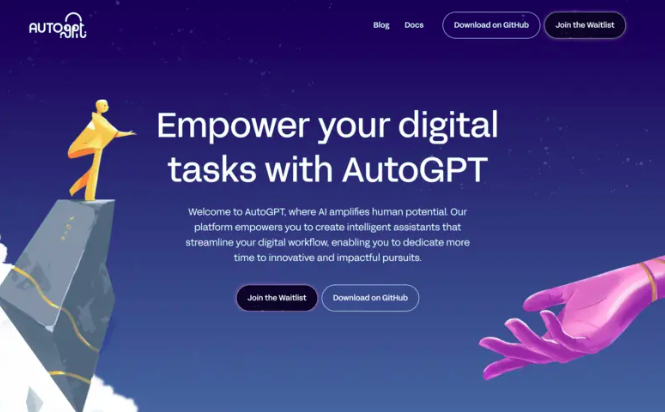
AutoGPT represents a class of frameworks centered on autonomous execution. It aims to decompose high-level goals into subtasks, retrieving information, calling APIs, and completing workflows without manual prompting.
This model of “fire-and-forget” workflows can be useful for exploratory tasks, research automation, or environments where minimal supervision is acceptable. However, it requires careful monitoring and governance, especially in production systems, to prevent runaway tasks or unintended actions.
AutoGPT’s plugin ecosystem and vector memory support make it a flexible tool for developers who want to experiment with agent autonomy, though its strengths are best realized in smaller team settings or research proofs of concept.
Choosing the Right Framework With an AI Software Development Company
There is no one-size-fits-all “best” framework. Instead, the right choice depends on several factors:
- Use case complexity: Simple assistants may benefit from LangChain’s flexibility, while enterprise workflows requiring auditability might lean toward Semantic Kernel
- Integration needs: Frameworks with rich connector ecosystems reduce development overhead for complex systems.
- Compliance and governance requirements: Enterprises with high regulatory demands may prioritize frameworks with built-in observability and control.
- Team expertise: Development partners with experience in specific ecosystems can accelerate delivery and avoid common pitfalls.
Working with an experienced AI software development company helps organizations map their objectives and technical constraints to the appropriate framework choice, ensuring both short-term delivery success and long-term maintainability.
Conclusion
AI agent frameworks have matured into foundational components for building intelligent, autonomous systems. Each framework presents a distinct balance of flexibility, observability, integration support, and production readiness. Whether the goal is rapid prototyping, complex orchestration, enterprise automation, or goal-driven autonomy, selecting the right framework is a strategic decision that affects both delivery speed and long-term value.
For organizations seeking to build robust AI systems, aligning framework choice with project goals and engaging with an experienced AI software development company can make the difference between fragile prototypes and scalable, maintainable products. As the ecosystem continues to evolve, these frameworks will play a central role in translating human intent into real-world AI-driven outcomes.
Relipa Software
Relipa Co., Ltd. is a Vietnam-based software development company established in April 2016. After two years of growth, our Japanese branch – Relipa Japan – was officially founded in July 2018.
We provide services in MVP development, web and mobile application development, and blockchain solutions. With a team of over 100 professional IT engineers and experienced project managers, Relipa has become a reliable partner for many enterprises and has successfully delivered more than 500 projects for startups and businesses worldwide.