

 Copy link


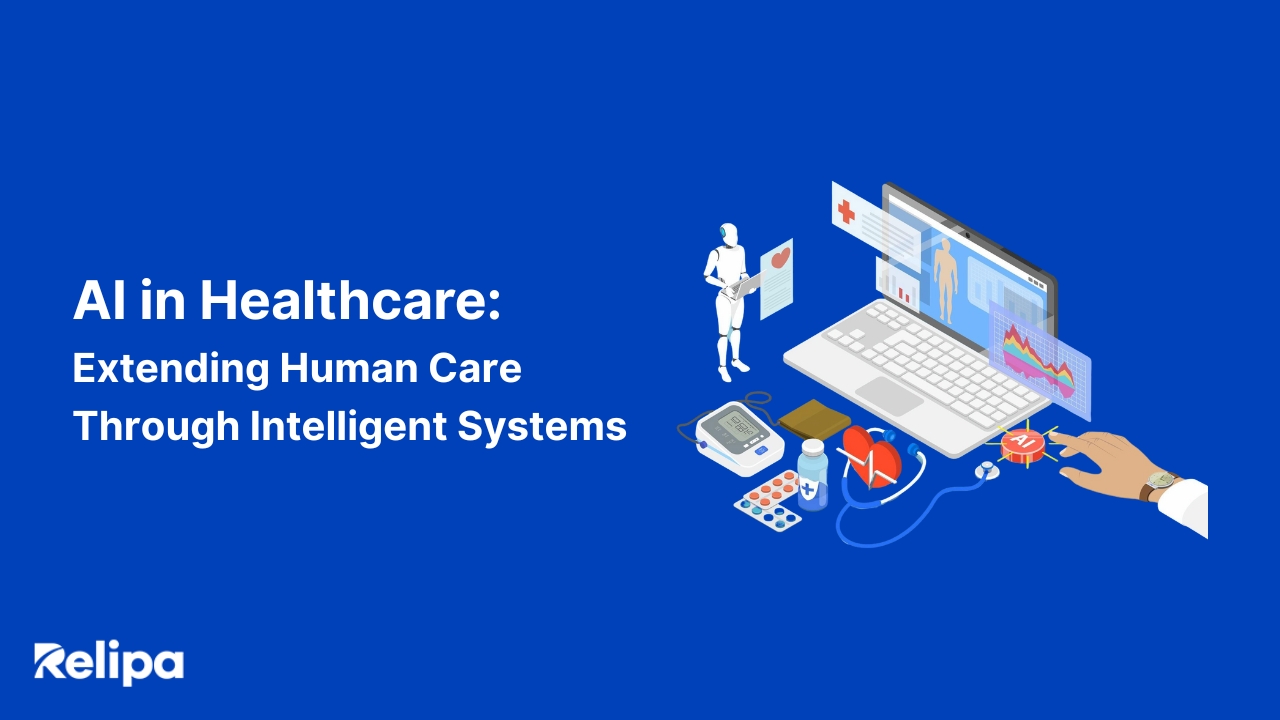
AI In Healthcare: Extending Human Care Through Intelligent Systems
Despite decades of medical innovation, many healthcare systems still struggle with delayed diagnoses, fragmented workflows, and uneven patient outcomes. The challenge is no longer access to knowledge, but the ability to apply that knowledge consistently and at scale across complex clinical environments.
This is where collaboration with experienced ai development companies becomes critical. Rather than offering isolated digital tools, modern AI partners embed intelligent systems directly into healthcare infrastructure, transforming reactive care delivery into continuously optimized, data-driven models.
AI in healthcare is no longer experimental. It is becoming foundational. As healthcare organizations seek measurable improvements in outcomes, efficiency, and sustainability, ai development companies are emerging as strategic enablers of system-wide transformation.
This blog examines how AI is reshaping healthcare delivery at a structural level and how ai development companies design, deploy, and scale intelligent systems that support clinical excellence.
Overview of AI in Healthcare
What is AI in Healthcare?
AI in healthcare refers to the application of machine learning, natural language processing, computer vision, and predictive modeling to perform tasks that traditionally required human cognitive effort. These include interpreting medical images, predicting patient deterioration, optimizing hospital operations, and supporting clinical decisions.
However, healthcare organizations rarely build these systems internally. They rely on specialized ai development companies that possess deep expertise in model training, data engineering, regulatory compliance, and enterprise integration.
The global AI in healthcare market is projected to grow from approximately USD 18 billion in 2024 to over USD 70 billion by 2029, reflecting rapid institutional adoption. This expansion signals strong demand for scalable AI infrastructure delivered by capable ai development companies.
The global AI in healthcare market is projected to grow from $18.16 billion in 2024 to $72.85 billion by 2029. This growth reflects a compound annual growth rate (CAGR) of 31.7%, signaling rapid adoption across the industry. (Source: SQ Magazine)
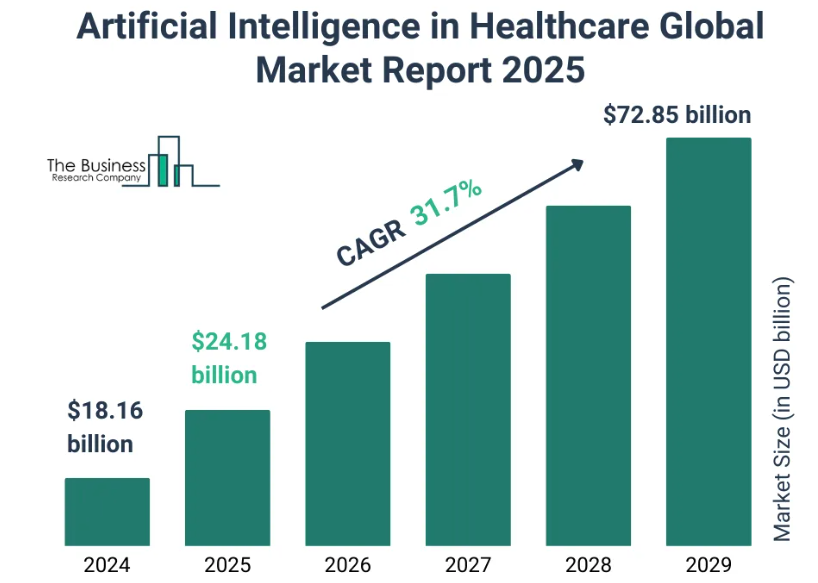
Reference: The Business Research Company
Drivers of Adoption
Several forces are accelerating AI integration in healthcare systems:
-
Massive volumes of health data exceeding human processing capacity
-
Rising operational costs and financial pressure
-
Workforce shortages and clinician burnout
-
Demand for measurable outcome improvement
-
Transition toward value-based care
Healthcare leaders increasingly partner with ai development companies to convert raw data into real-time clinical intelligence, enabling informed decisions at scale.
Benefits of AI in Healthcare
Enhanced Diagnostic Accuracy
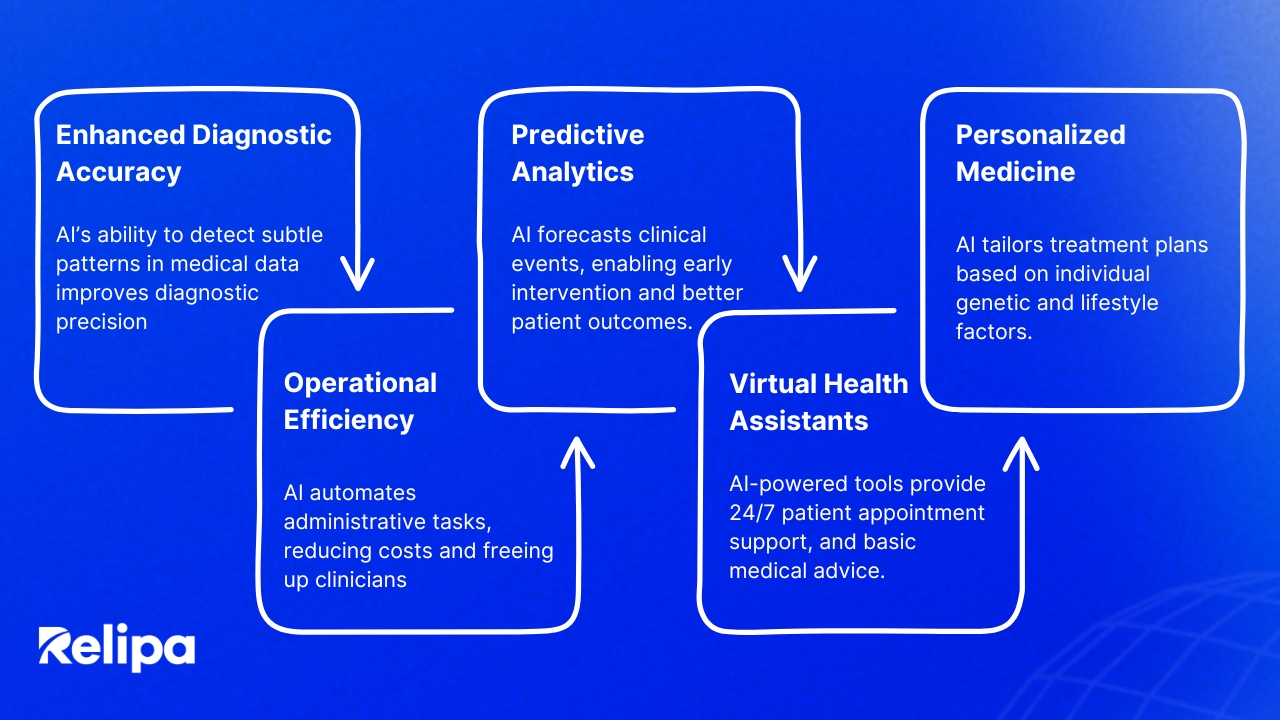
One of the most transformative impacts of AI in healthcare is improved diagnostic precision. AI models continuously analyze imaging scans, pathology data, and biometric signals to detect patterns that may not be visible through manual review alone.
Radiology remains a leading field for AI adoption. Many hospitals now use AI-assisted imaging tools developed in collaboration with ai development companies to accelerate interpretation and reduce variability across specialists.
By integrating AI into clinical workflows, hospitals reduce turnaround times while improving sensitivity in high-risk cases such as oncology, neurology, and cardiology.
(Source: SQ Magazine)
Operational Efficiency and Cost Reduction
Healthcare systems operate under intense budgetary constraints. Administrative processes consume significant resources and limit clinical capacity.
AI reduces these bottlenecks through intelligent automation of:
-
Scheduling systems
-
Clinical documentation
-
Insurance claims processing
-
Coding and billing operations
-
Resource allocation planning
AI development companies design these solutions to integrate seamlessly with hospital ERP and EHR platforms, ensuring measurable operational improvements rather than isolated automation.
For example, AI-driven automation and workflow tools can reduce hospital readmission rates by 19%, particularly in chronic disease management programs. (Source: TeckKV)
Predictive Analytics for Early Intervention
Predictive analytics enables healthcare providers to anticipate complications before they escalate.
Using historical and real-time patient data, AI systems forecast:
-
Risk of readmission
-
Sepsis onset
-
Chronic disease progression
-
Surgical complications
AI development companies build predictive engines that continuously learn from new data, supporting earlier interventions and reducing avoidable hospitalizations.
In current practice, predictive analytics tools are used in roughly 25% of US hospitals. (Source: Exainfo)
Virtual Health Assistants and Patient Engagement
AI-powered chatbots, symptom triage systems, and voice assistants provide 24/7 patient support without increasing clinician workload.
Healthcare providers collaborate with ai development companies to deploy conversational AI platforms that:
-
Guide appointment scheduling
-
Provide medication reminders
-
Offer preliminary symptom assessments
-
Support chronic disease self-management
These systems extend care engagement beyond hospital walls while maintaining consistency and scalability.
Personalized Medicine and Drug Discovery
AI systems analyze genetic, environmental, and lifestyle data to support personalized treatment strategies.
In pharmaceutical research, AI accelerates drug discovery by modeling molecular interactions and predicting compound efficacy. AI development companies support research institutions by building high-performance modeling environments capable of handling complex biomedical datasets.
Personalized medicine becomes scalable only when supported by robust AI architecture engineered by experienced ai development companies.
Use Cases for AI in Healthcare
Clinical Decision Support and Diagnostics
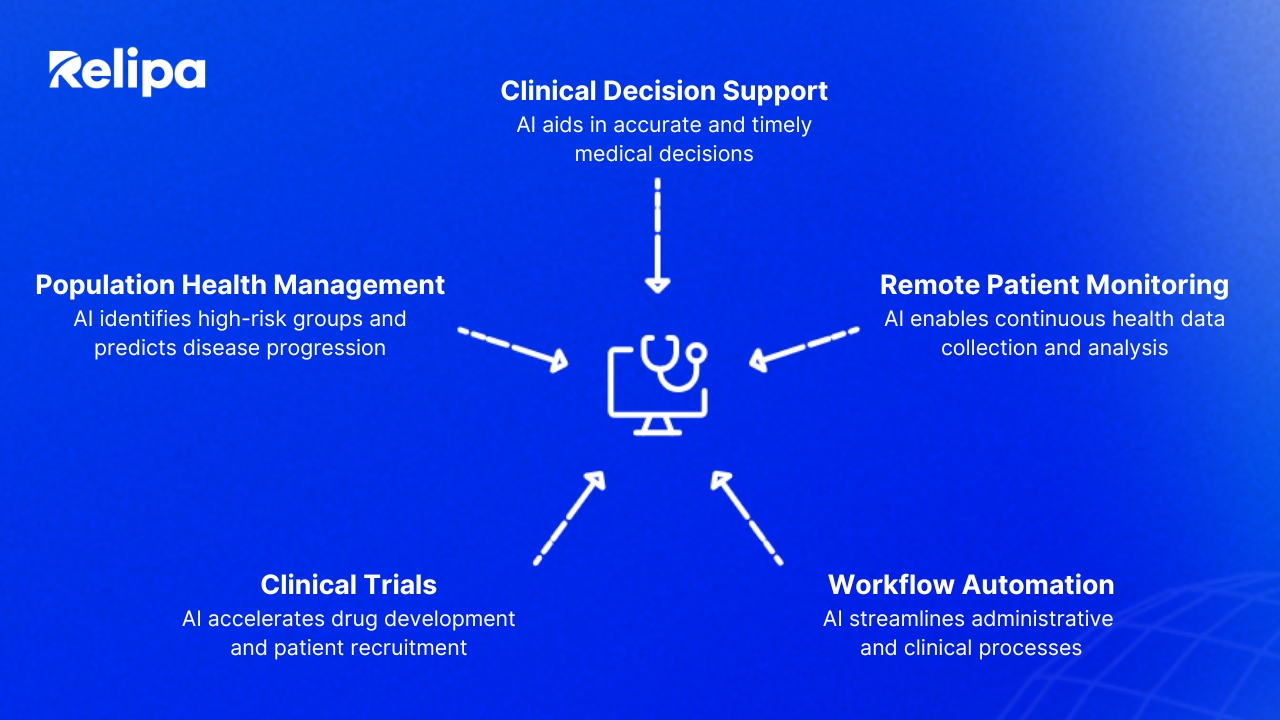
AI in healthcare strengthens clinical decision-making through real-time analysis of medical images, lab results, and patient histories. High-impact specialties such as radiology, oncology, and cardiology rely on these capabilities to improve diagnostic accuracy and reduce variability under heavy workloads. AI-enabled platforms have reduced medical imaging diagnosis time by up to 36%, supporting faster response in urgent care settings. (Source: AIC)
Remote Patient Monitoring and Chronic Care Management
AI solutions elevate remote monitoring into a continuous care model supported by predictive intelligence. Wearables and connected devices feed real-time data into AI systems that identify early signs of deterioration and trigger timely intervention. Chronic disease management and post-discharge care benefit significantly from this approach, with adoption expanding across internal medicine and cardiology. (Source: TechKV)
Administrative and Clinical Workflow Automation
Administrative overhead continues to constrain healthcare performance and clinician capacity. AI in healthcare automates documentation, billing, and coding processes, reducing manual effort and minimizing errors. Radiology departments adopting AI have reported a 9.9:1 return on investment, reflecting measurable gains in productivity and throughput. (Source: TechKV)
AI-Assisted Clinical Trials and Drug Development
Clinical research organizations use AI to improve patient cohort identification and trial performance forecasting. Machine learning models analyze diverse datasets to shorten recruitment timelines and reduce development risk. AI in healthcare continues to accelerate drug discovery and clinical validation in competitive global markets.
Population Health Management and Predictive Analytics
Population-level healthcare strategies increasingly rely on AI to identify high-risk groups and anticipate disease progression. Predictive analytics support targeted interventions and informed resource allocation across large patient populations. Value-based care models benefit directly from these capabilities.
The Future of AI in Healthcare
AI Becomes a Core Clinical Decision Layer
AI in healthcare will evolve from supporting individual tasks to operating as a continuous decision layer within clinical workflows. Rather than delivering isolated recommendations, AI systems will analyze patient data in real time and adjust guidance as conditions change. This shift supports earlier interventions, more consistent care standards, and reduced clinical variability across institutions.
Expansion Toward Longitudinal and Personalized Care
Future AI solutions will focus increasingly on longitudinal patient management rather than episodic care. Predictive models will support risk stratification, treatment personalization, and adaptive care pathways across the full patient journey. Multimodal AI, combining imaging, genomics, clinical notes, and real-world data, will become essential for precision medicine at scale.
Operational AI Drives Sustainability and Efficiency
Operational pressure will accelerate adoption of AI in healthcare across scheduling, capacity planning, and revenue cycle management. Intelligent automation will help healthcare organizations address workforce shortages and rising costs while maintaining care quality. Value-based care models will further increase reliance on AI-driven performance optimization and outcome measurement.
Trust, Governance, and Regulatory Readiness
Wider AI adoption will place greater emphasis on transparency, explainability, and regulatory compliance. Healthcare organizations will prioritize AI solutions that support auditability, bias monitoring, and model governance. Investment in data governance and MLOps will become a prerequisite for scaling AI safety in regulated environments.
Market Growth Favors Platform-Based AI Solutions
Market dynamics indicate a shift from standalone AI tools toward integrated healthcare AI platforms. The global AI in healthcare market is projected to exceed USD 67 billion in the mid-2020s, reflecting strong demand for scalable and interoperable AI capabilities. Enterprises that embed AI across end-to-end healthcare operations will capture the greatest long-term value.
Read more: Top 5 AI Trends In Healthcare: Shaping The Future Of Medical Innovation
Conclusion
Healthcare has always relied on expertise built through years of clinical experience. What changes with AI in healthcare is not the importance of clinical judgment, but the intelligence environment in which that judgment operates.
By partnering with experienced ai development companies, healthcare organizations move beyond fragmented pilots and build scalable intelligence into the core of care delivery.
Decisions are no longer made under information scarcity. They are supported by real-time analytics, predictive modeling, and continuously learning systems that improve with every interaction.
As digital transformation accelerates, healthcare leaders that collaborate strategically with ai development companies will achieve more predictable outcomes, greater operational resilience, and measurable improvements in patient care.