

 Copy link


Top AI Trends In Retail in 2026: How Intelligent Systems Are Redefining Global Commerce
The industry has always evolved alongside technology, but few shifts have been as profound as the rise of artificial intelligence. By 2026, AI trends in retail are no longer experimental initiatives or innovation labs’ side projects. They have become structural components of how retailers operate, compete, and grow in an increasingly complex global market.
At the same time, the global AI in retail market is expanding rapidly. Market estimates project growth from approximately USD 4.2 billion in 2025 to nearly USD 4.9 billion in 2026, with a compound annual growth rate exceeding 15%. These figures reflect a clear shift: AI is no longer viewed as a discretionary innovation, but as a competitive necessity embedded into enterprise strategy and execution.
To understand the AI trends defining retail in 2026, we need to look beyond surface-level use cases and examine how intelligence is moving deeper into the operational core of retail organizations, increasingly supported by specialized AI software developers who translate strategic ambition into scalable technical systems.
The Growing Role of AI in Retail Strategy
efore examining specific trends, it is important to understand the broader context. AI adoption in retail has accelerated significantly over the past few years, driven by rising customer expectations, margin pressure, supply chain volatility, and intensifying digital competition.
Recent industry research indicates that nearly 90% of retailers worldwide are already using AI or actively piloting AI initiatives, and almost all plan to increase AI investment in the near term. Retailers deploying AI report revenue growth in more than 85% of cases, alongside measurable reductions in operational costs and inventory inefficiencies.
The global AI in retail market continues to expand at double-digit growth rates, reinforcing the reality that AI is becoming foundational infrastructure rather than an optional enhancement. However, what distinguishes leaders from followers in 2026 is not experimentation, but execution maturity. Retailers that succeed are those partnering with experienced AI software developers to integrate AI capabilities into enterprise architecture, data governance models, and long-term operational roadmaps.
AI is no longer layered on top of retail systems; it is embedded within them.
Read more: AI In Retail: Transforming Efficiency, Personalization, And Customer Experience
Top AI Trends in Retail in 2026
Personalization Reflects a Deeper Shift in Decision Logic

Personalization is often framed as a marketing enhancement, but within the broader AI trends in retail, it represents a structural shift in how decisions are made. Intelligence is moving from generalized segmentation toward real-time, individual-level inference.
Modern AI systems continuously interpret customer intent by analyzing behavioral signals, contextual factors, transaction history, and engagement timing. Instead of applying static rules, they dynamically adjust product recommendations, pricing incentives, promotional offers, and content delivery for each customer.
Data shows that 71% of retailers already use AI for personalization, but what matters in 2026 is where personalization is applied. When personalization influences core revenue levers rather than surface-level messaging, it becomes a strategic capability rather than a feature (Source: WiFiTalents).
This transformation requires strong data pipelines, model governance, and scalable deployment infrastructure. AI software developers play a pivotal role in designing systems that can process high-volume data streams, retrain models continuously, and integrate outputs seamlessly into e-commerce platforms, POS systems, and mobile applications.
Personalization, therefore, becomes a decision engine rather than a marketing tool.
Supply Chains Become Learning Systems, Not Planning Artifacts
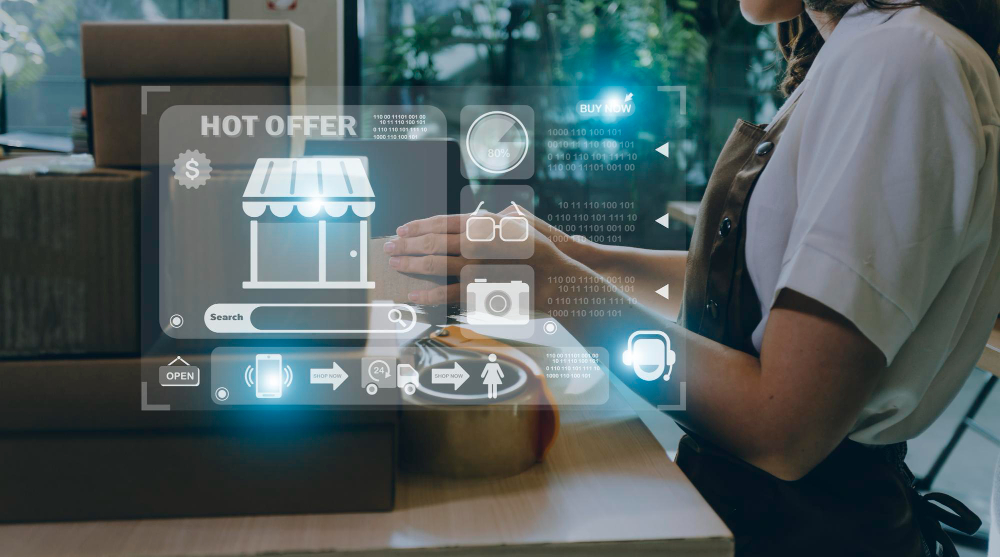
Another defining AI trend in retail is the transformation of supply chains into adaptive, continuously learning systems. Traditional retail supply chains relied on periodic planning cycles and historical averages. In contrast, AI-driven supply chains operate on real-time intelligence.
Advanced forecasting models now combine internal data—sales velocity, promotions, inventory levels—with external signals such as weather patterns, regional events, economic indicators, and social trends. These models update predictions dynamically, improving demand forecasting accuracy and reducing both stockouts and excess inventory.
The shift is not merely technological; it is philosophical. Planning becomes probabilistic rather than static. Decision-makers operate within systems that surface predictive insights instead of retrospective reports.
Implementing such systems requires collaboration between operations teams and AI software developers who can architect machine learning pipelines, deploy forecasting models into production environments, and ensure explainability for executive oversight.
In 2026, supply chains that learn outperform supply chains that simply react.
Pricing Exposes the Tension Between Optimization and Trust
Dynamic pricing remains one of the most visible AI trends in retail. AI systems analyze demand elasticity, competitor pricing, customer sensitivity, and inventory lifecycle simultaneously to optimize margins.
Retailers leveraging AI for pricing report measurable improvements in profitability and inventory turnover. Yet pricing also exposes a critical tension: optimization must coexist with trust.
Algorithmic pricing, if implemented without governance, can result in inconsistent customer experiences, perceived unfairness, or regulatory scrutiny. In an era of increasing transparency expectations, retailers must balance computational efficiency with ethical responsibility.
AI software developers contribute by embedding explainability mechanisms, audit logs, and policy constraints into pricing systems. Governance frameworks ensure that optimization models operate within defined ethical and compliance boundaries.
Pricing, therefore, becomes a case study in responsible AI deployment—illustrating that intelligence must be managed as carefully as it is scaled.
Conversational AI Changes How Retail Is Discovered

Conversational interfaces represent another major AI trend in retail. AI assistants are evolving from customer service tools into decision intermediaries.
Customers increasingly rely on AI-powered chat interfaces and shopping agents to discover products, compare options, and evaluate suitability. As AI systems mediate purchasing journeys, brand visibility depends not only on search ranking but on algorithmic recommendation logic.
For retailers, this shift raises strategic questions: How does product data need to be structured for AI readability? How can brand differentiation be preserved when AI aggregates options across multiple sellers?
AI software developers help retailers integrate conversational capabilities into digital ecosystems, design APIs for third-party AI agents, and ensure that internal data models are optimized for machine consumption as well as human browsing.
Retail discovery is becoming algorithmically curated.
Immersive Experiences Solve a Structural Retail Problem
AI-powered augmented reality (AR) and immersive visualization tools are often described as engagement innovations. Yet within AI trends in retail, their significance lies in risk reduction.
Uncertainty at the moment of purchase—whether related to size, fit, scale, or compatibility—contributes to high return rates and customer dissatisfaction. AI-driven visualization tools allow customers to simulate product placement or usage before purchase, reducing ambiguity.
In sectors such as furniture, fashion, and home improvement, immersive experiences significantly improve conversion quality and decrease return logistics costs.
Behind these experiences are complex computer vision models, real-time rendering engines, and scalable cloud architectures—systems typically developed and optimized by specialized AI software developers.
Immersion becomes a practical solution to structural inefficiency.
AI-Driven Fraud Detection and Retail Security
Security remains a fundamental operational priority. As digital commerce expands, fraud sophistication increases.
AI-powered fraud detection systems monitor transaction patterns, behavioral anomalies, device fingerprints, and geographic inconsistencies in real time. These systems reduce false positives while improving detection precision, protecting both customers and revenue streams.
Beyond payments, AI also enhances in-store security through video analytics and shrinkage detection.
However, with greater surveillance capabilities comes greater responsibility. Retailers must implement ethical AI frameworks that address data privacy, bias mitigation, and regulatory compliance.
AI software developers contribute by integrating encryption standards, access controls, model validation procedures, and audit mechanisms into security architectures. In 2026, security is both a technological and governance challenge.
Operational AI and Workforce Optimization
AI trends in retail extend beyond customer-facing applications. Internal operations are increasingly augmented by intelligent systems.
Retailers deploy AI tools to forecast staffing needs, optimize shift scheduling, automate replenishment tasks, and manage execution workflows across distributed store networks. These systems improve labor productivity while maintaining service quality.
Rather than replacing employees wholesale, AI augments human decision-making, freeing teams from repetitive coordination tasks and enabling focus on high-value interactions.
Developing such platforms requires scalable integration across HR systems, inventory databases, and operational dashboards—another domain where AI software developers play a critical enabling role.
Operational AI is redefining workforce management.
The Strategic Implications of AI Trends in Retail
Taken together, these AI trends in retail signal a structural industry transformation. Retailers are transitioning from siloed digital tools toward integrated intelligence platforms that operate continuously and adaptively.
Competitive advantage now depends on execution depth: robust data foundations, model lifecycle management, cybersecurity integration, and cross-functional governance. Organizations must treat AI as enterprise infrastructure rather than isolated experimentation.
This transformation requires alignment between leadership vision, operational readiness, and technical capability. Retailers increasingly collaborate with experienced AI software developers to design scalable architectures, deploy production-ready models, and ensure long-term maintainability.
AI maturity becomes a differentiator not just in capability, but in resilience.
Conclusion
In 2026, the question for retailers is no longer whether to adopt AI, but how to implement it strategically, responsibly, and at scale. Moving from pilot initiatives to enterprise-wide integration demands technical expertise, structured governance, and clear business alignment.
Organizations that embed AI into core decision systems—rather than treating it as an overlay—will define the next generation of retail leadership. Partnering with skilled AI software developers ensures that intelligence is not only innovative, but operationally sustainable.
Now is the time to move beyond observing AI trends in retail and begin building the capabilities that will shape the future of commerce.