

 Copy link


Unlocking Synergies: Exploring The Integration Of RPA And AI For Enhanced Efficiency – Benefits And Use Cases
What is RPA? RPA is one of many technological efforts aimed at emancipating human minds from boring, tedious tasks. However, unlike AI or machine learning, RPA is easier to develop and apply in real life.
To understand more about RPA as well as when you should and shouldn’t develop RPA, let’s read this article.
What is RPA?
RPA is the abbreviation for Robotic Process Automation. In plain English, RPA is a technology used to replace humans doing repetitive tasks with clear processes that do not require much brainpower.
So which processes are suitable for being automated with robots? Consider processes that humans perform regularly, almost mechanically, day in and day out. RPA was developed to simulate the manual operations of those employees. With just one click, robots can replace dozens or hundreds of people.

Take a bank, for instance. Daily, 20 employees might engage in a repetitive cycle of going to Excel, downloading data, performing calculations on the computer, and re-uploading. RPA allows banks to deploy robots for this job instead of relying on human operations. Programmed robots can execute these tasks at specified times. Once completed, the robot sends a notification email along with the output.
RPA comes in three distinct types:
- Attended Robot: These robots work under human supervision, assisting in automating processes.
- Unattended Robot: Operating autonomously without the need for human oversight, these robots can make independent decisions. People only need to set a specific time for them to run.
- Hybrid Robot: Although a combination of the first two types, Hybrid RPA is infrequently used. Despite appearing to offer the advantages of both attended and unattended automation, integrating hybrid automation into business processes is highly complex. This complexity arises from the need for the right tools and qualified personnel to ensure successful implementation.
What is AI?
Artificial intelligence (AI) involves computer systems or “machines” simulating human intelligence processes. These processes encompass learning, which involves acquiring information and understanding contextual rules; reasoning by utilizing context and rules to conclude; and self-correction by learning from both successes and failures. The applications of AI are vast, ranging from image recognition and machine vision to speech recognition, chatbots, natural language generation, and sentiment analysis.
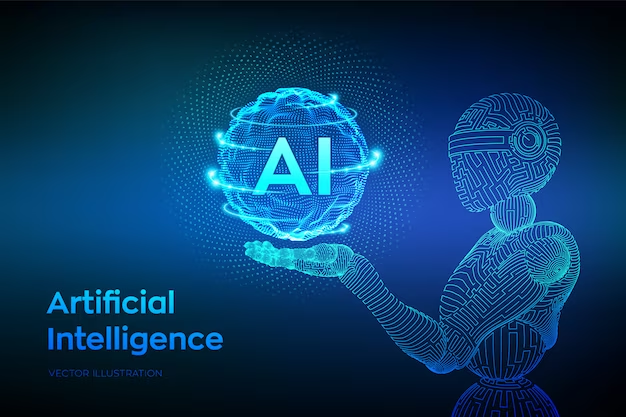
In contrast to RPA, which collaborates with humans by automating repetitive processes (attended automation), AI is considered as a technology capable of replacing human labor and automating end-to-end processes (unattended automation). RPA relies on structured inputs and logic, while AI processes unstructured inputs and formulates its own logic. Combining both RPA and artificial intelligence can result in a fully autonomous, intelligent process automation.
Given that organizations deal with both structured data (such as form fields) and unstructured data (like free text and natural speech), many processes necessitate the use of both RPA and AI to achieve comprehensive automation or to enhance a robotic process post-deployment.
Here is the table comparing the differences between AI and RPA
|
Feature |
RPA |
AI and Machine Learning |
| Definition | A software robot that can imitate human actions | A simulation of human intelligence in machines programmed to think and act like humans |
| Function | RPA robots automate tasks based on predefined rules | AI operates through ‘thinking’ and ‘learning’ |
| Development Approach | Process-driven | Data-driven |
| Data | Requires structured data | Utilizes freeform data, independent of specific processes |
| Bots | Handles only repetitive actions and workflows | Intelligent, self-learning, and capable of detecting fraud and errors |
| Integration | Can integrate Machine Learning into the process | May not require integration with RPA |
| Human Interaction | Requires human oversight as it cannot make decisions independently | Doesn’t require human monitoring after training |
| Development Time | Faster, ranging from 1-2 months for simple tasks to 3-4 months for complex ones | Requires significant effort, with development time spanning 4-5 years or more |
How can RPA and AI be combined?
In the past, RPA technology was mainly used for repetitive, rules-based tasks. It still depends on the human factor to design the processes, make reviews, and provide maintenance. However, the integration of AI and ML into RPA platforms will enable these systems to make data-driven decisions independently. The convergence of RPA with AI represents the integration of rule-based automation with more advanced cognitive capabilities, and it is marked by the emergence of IPA (Intelligent Process Automation), or SPA (Smart Process Automation). This trend involves combining RPA with technologies such as machine learning, natural language processing, and computer vision to enable bots to handle tasks that involve decision-making, pattern recognition, and understanding unstructured data.
Prediction: Intelligent Automation Becomes Mainstream
AI-powered RPA will no longer be confined to simple rule-based tasks. In fact, RPA bots integrated with AI is likely to become mainstream, with bots performing tasks that require contextual understanding, sentiment analysis, and even creative problem-solving. This shift will further blur the lines between human and bot capabilities in the workplace. Bots will play a diminished role as assistants to humans and, instead, emerge as a driving force in the process of digitalization. As a matter of fact, several companies, including Adept, OpenAI, Mistral AI, and DeepMind, are at the forefront of developing AI models capable of autonomously designing and creating RPA processes based solely on natural language commands. This will allow for a system that is self-sustained with minimal supervision from human.
Pros and Cons of Integrating RPA and AI
Advantages of integrating RPA and AI
|
Advantage |
Description |
| Improve accuracy | RPA can greatly reduce the time taken to complete certain tasks. Faster process execution improves organizational productivity and agility. This happens both directly and indirectly as a result of freeing up employee time, enabling them to focus on other higher-value tasks. |
| Greater efficiency | When AI is used based on unstructured data generated by RPA workflows, improved process efficiency results in quicker access to structured data. This can potentially enhance the efficiency of AI outcomes. |
| Stronger decision-making | Artificial intelligence, in particular, has a part to play in guiding better business decision-making. Combined with RPA, a huge amount of data can be processed and analyzed to gain vital insights. Based on this data, recommended courses of action can be suggested. This means that businesses can remove the guesswork from their decisions and have confidence that they’re making data-driven choices that are most likely to be the right ones. |
| Reduced costs | For businesses deploying RPA and AI, faster processes and reduced demand for human resources contribute to substantial cost savings. Deloitte research shows that organizations have cut costs by over 25% with IA, making a significant impact on their profits. |
| Digital Transformation with the integration of RPA and AI | In the journey towards digital transformation, both IT and business leaders strive to streamline processes through clever automation. While quick fixes like RPA might seem tempting, they often lead to data silos that cause more problems in the long run. On the flip side, hyper-automation takes a more comprehensive approach by integrating various technologies like AI/ML and business process management. This creates a smooth end-to-end experience, combining human skills with technology to quickly identify, assess, and automate numerous business and IT processes. |
Disadvantages of Integrating RPA and AI
Complexity of Developing an Automation Platform
Creating an integrated automation platform that perfectly compounds and fully utilizes RPA and AI capabilities is difficult. To achieve success, enterprises have to plan and develop carefully. Start by creating smaller prototypes to assess the integration of RPA and AI before expanding the scale. Collaborate with automation technology vendors for guidance during this testing phase.
Ensuring Responsible AI Implementation
Responsible AI implementation is crucial to avoid ethical, privacy, and security issues. Reduce risks by selecting validated AI models that have undergone proper training and emphasizing data security. Integrate human oversight at key points, such as before data transitions and between automated processes, to detect errors and ensure ethical decision-making. Implement practices or mechanisms for continuous monitoring of AI performance and logging data to identify potential issues.
Multidisciplinary Knowledge, Proficiency, and Expertise
Defining emerging and complex technologies brings about challenges, especially in finding experts who get the hang of knowledge in the field. Integrating RPA and AI demands a multidisciplinary approach, necessitating a blend of expertise in automation technologies, AI algorithms, data analysis, and domain-specific knowledge. The critical aspect of successfully integrating RPA and AI lies in establishing a solid foundation. This involves meticulous implementation of AI into your RPA Center of Excellence (CoE) or, if starting from scratch, ensuring the right governance structure is in place.
Real-world Use Cases of RPA and AI Integration
On a more practical level, generative AI (Gen AI) opens up an infinite array of possibilities and applications. Different industries are inclined to leverage Gen AI to enhance and streamline their processes. Let’s delve into some of the most prevalent industry-specific use cases of generative AI:
Customer Service
With NLP, AI can understand and analyze the feelings expressed in a customer’s text. ChatGPT, a leading natural language processing (NLP) platform, can add this capability to your RPA system. Let’s break it down with an example.
Imagine you receive a customer feedback message through one of your channels. The system takes in the message and sends it to an analysis robot. The robot reads the content and determines it’s a complaint, going even further to identify specifics like a missing order or a late shipment. Once the sentiment is figured out, the AI shares the decision with a software robot.
Now, based on what the message says, the robot can direct it to the right team for appropriate action, like bringing the issue to immediate human attention. In some situations, you might set up the robot to do more specific tasks, such as updating a customer record. The combination of RPA and AI with NLP is especially exciting for self-service chatbots that customers can use to handle common tasks without needing human help.
The possibilities are vast and varied, suitable for many industries. Picture a system designed to handle vendors in the supply chain or help manufacturers respond more effectively to client requests or concerns.
Finance
Financial Services
The integration of RPA’s process automation capabilities with AI’s data analysis and pattern recognition significantly enhances efficiency, accuracy, and decision-making in financial institutions. This dynamic combination allows these institutions to navigate complex regulatory landscapes with greater ease, providing personalized services to customers. Additionally, adaptability to swiftly changing market conditions becomes a notable advantage.
Mortgage Applicant Processing & KYC
In the realm of mortgage processing, companies can leverage RPA for streamlined initial data collection, document verification, and data entry processes, improving overall efficiency and accuracy. Subsequently, the application of AI algorithms becomes crucial for in-depth data analysis, credit risk assessment, and tailored mortgage recommendations based on the applicant’s financial history and market trends. AI’s capabilities extend further to ensure compliance with KYC regulations, identify potential risks, and offer insightful decision-making support.
Investment Portfolio Management
Within investment portfolio management, RPA proves invaluable in handling repetitive administrative tasks like rebalancing and transaction execution. Simultaneously, AI algorithms step in to optimize the analysis of market trends, economic indicators, and individual investor preferences. This combined approach empowers businesses with valuable insights and recommendations, optimizing investment strategies for enhanced performance.
Real Estate
In the real estate industry, Intelligent Automation (IA) takes the forefront in responding to potential buyers. Bots, powered by intelligent automation, deliver swift and consistent responses, engaging with interested buyers before the need for human intervention. Furthermore, these bots play a crucial role in property valuation, utilizing intelligent algorithms to compare similar homes and establish an average of sales, thereby suggesting an optimal selling price.
When it comes to loan management, bots equipped with machine learning and data analytics capabilities play a pivotal role in forecasting loan defaults. These bots create sophisticated models that analyze data to predict potential risks. Additionally, Robotic Process Automation (RPA) comes into play by automating the loan approval process, contributing to efficiency gains and mitigating human bias in decision-making.
Insurance
Insurance industry firms stand to gain substantial advantages by integrating RPA and AI, enhancing operational efficiency, customer service, risk assessment, and claims processing.
Policy Renewal and Management
AI analysis, delving into past claims, customer behavior, and market trends, uncover opportunities for policyholders to adjust coverage or capitalize on discounts. To streamline these processes, RPA bots can automate policy renewal reminders and premium calculations, eliminating repetitive manual tasks and improving overall efficiency.
Fraud Detection and Prevention
Utilizing the same data, firms can employ AI for fraud detection, flagging claims that display suspicious characteristics. Advanced analysis can even identify intricate fraud schemes, elevating the accuracy of detection and strengthening fraud prevention measures within the insurance industry.
Retail
In the retail sector, the synergistic application of RPA and AI is primarily aimed at elevating customer service and experiences, optimizing operations, and enhancing decision-making to remain competitive in the dynamic market landscape.
Inventory Management
Efficient inventory management is pivotal for cost reduction. Integrating RPA with ERP systems facilitates inventory tracking, order processing, and stock replenishment. Leveraging sales data, market trends, and external factors such as weather forecasts enables companies to predict demand accurately. This, in turn, allows for optimized stock levels, preventing issues like overstock or stockouts.
Price Optimization
To bolster revenue streams and maintain competitiveness, continuous monitoring of competitors’ pricing is crucial. RPA plays a vital role in updating prices across various sales channels in real time. By analyzing consumer behavior and market conditions, AI can contribute to suggesting dynamic pricing strategies that maximize revenue, providing a strategic advantage in the retail landscape.