
The blockchain industry has evolved far beyond cryptocurrencies and digital collectibles. Today, enterprises are exploring innovative business models that combine real-world activities with digital incentives, creating entirely new ways to engage users and generate value.
One of the most notable developments in this area is Move-to-Earn (M2E), a concept that rewards users with digital assets for participating in physical activities such as walking, running, cycling, or other forms of exercise. While the model initially gained attention from Web3 enthusiasts and fitness communities, it has since attracted broader interest from organizations seeking to combine health, gamification, and blockchain-based incentives.
From our experience providing blockchain technology consulting, Move-to-Earn represents more than a passing trend. It demonstrates how blockchain can bridge the physical and digital worlds, creating sustainable engagement models that benefit both businesses and users. For enterprise leaders evaluating new digital products and revenue streams, understanding the mechanisms and potential of Move-to-Earn is becoming increasingly important.
What Is Move-to-Earn?
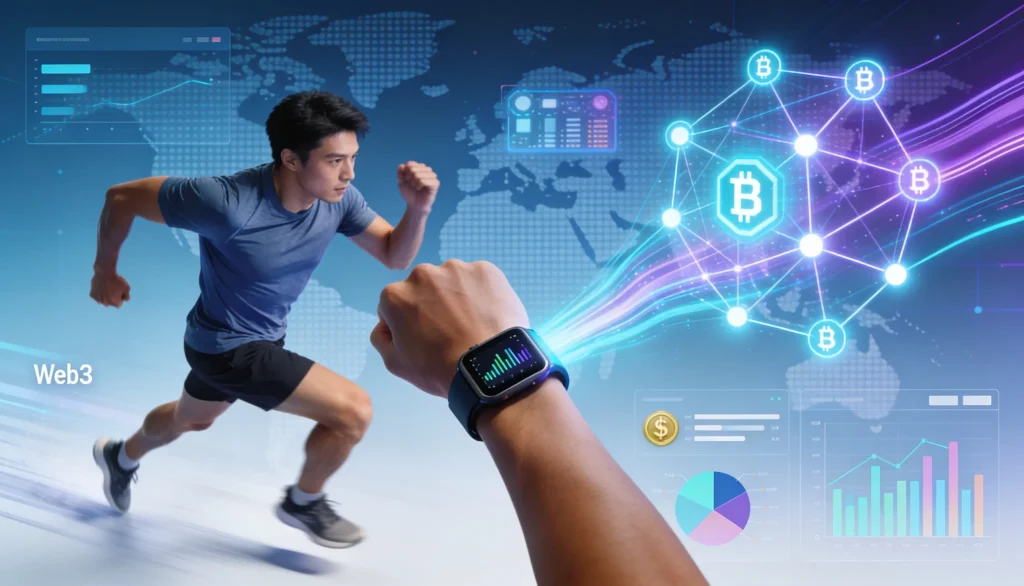
Move-to-Earn is a blockchain-based model that rewards users for physical activity. Unlike traditional fitness applications that primarily track performance, Move-to-Earn platforms introduce economic incentives by converting movement into digital rewards, often in the form of cryptocurrencies, tokens, or NFT-based assets.
The concept is relatively straightforward. Users install a mobile application, connect a digital wallet, and participate in physical activities such as walking or jogging. The application uses technologies such as GPS tracking, motion sensors, and blockchain infrastructure to verify activity. Based on predefined rules, users receive rewards that can be used within the platform or exchanged in broader digital asset ecosystems.
From an enterprise perspective, Move-to-Earn introduces a powerful value proposition. Instead of simply encouraging user engagement through points or badges, companies can create ecosystems where measurable physical activity generates tangible digital value. This significantly enhances motivation and encourages long-term participation.
More importantly, Move-to-Earn demonstrates how blockchain technology can transform user behavior into a core component of a digital business model. Rather than relying exclusively on advertising or subscriptions, organizations can build communities around participation, ownership, and incentive-driven engagement.
Why Move-to-Earn Has Attracted Global Attention
The rapid growth of Move-to-Earn can be attributed to its ability to combine multiple market trends into a single ecosystem.
First, there is increasing global awareness regarding health and wellness. Many employers, insurers, and healthcare providers are actively investing in solutions that encourage healthier lifestyles. At the same time, consumers are becoming more interested in technologies that help them monitor and improve physical activity.
Second, blockchain technology has introduced new methods for managing digital ownership and rewards. By creating tokenized incentive structures, organizations can reward user participation in ways that were previously impossible in traditional applications.
Third, gamification continues to prove effective in driving engagement. By turning exercise into a rewarding and competitive experience, Move-to-Earn platforms make physical activity more enjoyable and sustainable.
The combination of these factors creates a unique business opportunity. Rather than viewing fitness as a standalone activity, Move-to-Earn platforms position it within a broader digital economy where engagement, achievement, and rewards are interconnected.
The Two Main Types of Move-to-Earn Models
Although Move-to-Earn is often discussed as a single category, there are actually two distinct approaches that enterprises should understand when evaluating business opportunities.
Fitness-Oriented Move-to-Earn
The first model directly connects physical activity with rewards. In this approach, users receive incentives based on activities such as walking, running, or other forms of exercise.
Many platforms utilize NFT-based items—most commonly digital sneakers or sports equipment—that influence how rewards are earned. The quality, rarity, or characteristics of these NFTs often affect reward generation, adding a layer of personalization and gamification.
This approach creates a direct relationship between exercise and economic incentives. The more actively users participate within the platform’s rules, the more rewards they can potentially earn.
From a business standpoint, this model is particularly attractive because it creates measurable engagement while simultaneously promoting health and wellness outcomes.
Hybrid Move-to-Earn and Play-to-Earn
The second model combines Move-to-Earn with gaming mechanics.
In these ecosystems, physical activity generates resources, energy, or progression that can be used within a game environment. Rather than rewarding exercise directly with financial value, movement contributes to character development, battles, virtual asset creation, or other gaming activities.
This hybrid model expands the target audience beyond fitness enthusiasts. By integrating gaming elements, businesses can attract users who are motivated by entertainment, competition, and digital asset ownership.
For enterprises, this creates additional monetization opportunities through NFTs, virtual economies, premium features, and in-game transactions.
Leading Examples of Move-to-Earn Platforms
Several projects have helped define the Move-to-Earn landscape and demonstrate the potential of this business model.
STEPN
STEPN is widely recognized as one of the pioneers of the Move-to-Earn movement. Built on blockchain infrastructure, the platform introduced a model where users purchase NFT sneakers and earn rewards based on walking, jogging, or running activities.
What made STEPN particularly notable was its ability to connect digital assets with real-world movement in a way that felt intuitive and engaging. Users could select different categories of NFT sneakers, each optimized for specific activity ranges and reward structures.
From a business perspective, STEPN demonstrated how blockchain technology could be used to create a self-sustaining ecosystem built around user participation. The platform successfully combined NFTs, fitness tracking, token economics, and gamification into a single user experience.
Its rapid adoption provided valuable insights into how tokenized incentive structures can drive user acquisition and retention.
Genopets
Genopets represents a different interpretation of the Move-to-Earn model by incorporating stronger gaming elements.
Instead of focusing exclusively on physical activity, the platform allows users to convert real-world movement into in-game progress. Physical activity contributes to the development and growth of digital characters, creating an engaging blend of fitness and gaming.
This approach illustrates how Move-to-Earn can evolve beyond simple reward systems. By integrating movement with interactive experiences, organizations can build ecosystems that encourage sustained engagement over longer periods.
For enterprises considering Web3 products, Genopets highlights the potential for combining blockchain technology, gamification, and behavioral incentives into a unified platform.
Business Opportunities Created by Move-to-Earn
For CEOs, COOs, and CTOs evaluating blockchain initiatives, Move-to-Earn should not be viewed solely as a fitness trend. It is better understood as a framework for creating new customer engagement models.
One opportunity lies in the corporate wellness sector. Companies increasingly invest in employee wellness programs to improve productivity, reduce healthcare costs, and strengthen workplace culture. Move-to-Earn platforms can provide measurable incentives that encourage healthier behaviors while generating actionable engagement data.
Another opportunity exists within healthcare and insurance industries. Organizations may reward users for maintaining active lifestyles, potentially linking incentives to wellness programs or preventive healthcare strategies.
Retail and consumer brands can also leverage Move-to-Earn mechanics to drive loyalty and customer engagement. Instead of traditional point systems, businesses can reward physical activity through branded digital assets, exclusive benefits, or tokenized rewards.
Sports and fitness brands may find particular value in combining physical merchandise with NFT ownership, opening new opportunities for community-building and digital commerce.
The Future Potential of Move-to-Earn
The long-term potential of Move-to-Earn extends beyond walking and running.
As wearable technology continues to advance, a wider variety of physical activities can potentially be integrated into blockchain-based ecosystems. Cycling, swimming, dancing, strength training, and team sports may all become part of future Move-to-Earn models.
The growth of sensors, IoT devices, and fitness wearables will likely improve the accuracy and breadth of activity tracking. This enables organizations to design more sophisticated reward systems based on diverse forms of physical performance.
There is also significant potential for integration with the metaverse and immersive digital environments. Users may eventually see their real-world activities reflected through digital avatars, virtual achievements, and blockchain-based assets.
Imagine a future where an athlete’s real-world performance automatically contributes to their metaverse identity, unlocks digital rewards, and generates value within a broader ecosystem. Such scenarios highlight how Move-to-Earn could evolve into an integral part of the next generation of digital experiences.
Challenges Enterprises Must Address
Despite its promise, Move-to-Earn presents several challenges that should be carefully evaluated before development begins.
One critical challenge is sustainability. Many early projects struggled to maintain long-term economic balance because reward systems were not designed to support continuous growth. Building a sustainable token economy requires careful planning and ongoing monitoring.
Another challenge is fraud prevention. Since rewards are tied to activity, organizations must implement reliable verification systems that prevent manipulation and ensure fairness.
Scalability is also important. As user numbers increase, platforms must handle larger transaction volumes while maintaining cost efficiency and performance.
Finally, regulatory requirements regarding digital assets continue to evolve. Enterprises must consider compliance, taxation, privacy, and security requirements when designing Move-to-Earn ecosystems.
Why Blockchain Technology Consulting Is Essential for Move-to-Earn Projects

Developing a successful Move-to-Earn platform involves much more than building a mobile application. Organizations must design token economies, NFT ecosystems, smart contracts, reward mechanisms, user experiences, and blockchain infrastructure that can scale sustainably.
This is where blockchain technology consulting becomes essential.
An experienced consulting partner helps enterprises evaluate business feasibility, identify suitable blockchain architectures, and design sustainable economic models. Rather than focusing solely on technology, consulting aligns blockchain implementation with measurable business outcomes.
A structured consulting approach typically includes:
- Business model validation
- Tokenomics design
- Blockchain selection
- NFT ecosystem architecture
- Smart contract development strategy
- Security and compliance planning
- Scalability optimization
By addressing these elements early, enterprises can reduce risk and accelerate time-to-market.
Our Approach to Blockchain Technology Consulting for Move-to-Earn
As a blockchain consulting and development partner, we help enterprises transform innovative concepts into scalable digital products.
Our approach begins with identifying business objectives and validating whether Move-to-Earn mechanics align with user needs and market opportunities. We then design technical architectures that balance performance, sustainability, and security.
From smart contract development and NFT integration to mobile application architecture and tokenomics strategy, our teams provide end-to-end support throughout the product lifecycle.
Most importantly, we focus on building systems that are not only technologically advanced but also commercially viable. The goal is to ensure that blockchain becomes a driver of long-term business value rather than simply a technology experiment.
Conclusion
Move-to-Earn represents one of the most compelling examples of how blockchain can connect digital ecosystems with real-world behavior. By rewarding physical activity through tokenized incentives, organizations can create highly engaging platforms that combine wellness, community, and economic value.
While the concept is still evolving, its potential extends far beyond fitness applications. Corporate wellness programs, healthcare initiatives, customer loyalty platforms, and metaverse experiences may all benefit from Move-to-Earn principles in the years ahead.
However, realizing this potential requires more than enthusiasm for blockchain. It requires strategic planning, sustainable tokenomics, and scalable technology infrastructure.
With the support of experienced blockchain technology consulting, enterprises can navigate these challenges and build next-generation platforms that create lasting value for both businesses and users.
Relipa Software
Relipa Co., Ltd. is a Vietnam-based software development company established in April 2016. After two years of growth, our Japanese branch – Relipa Japan – was officially founded in July 2018.
We provide services in MVP development, web and mobile application development, and blockchain solutions. With a team of over 100 professional IT engineers and experienced project managers, Relipa has become a reliable partner for many enterprises and has successfully delivered more than 500 projects for startups and businesses worldwide.
