
Over the past two years, enterprise AI conversations have changed dramatically.
Initially, many organizations were impressed by the capabilities of large language models. Teams experimented with AI assistants, internal chatbots, knowledge-search tools, and customer support automation. Some projects delivered promising results. Others quickly encountered a familiar problem.
The AI sounded intelligent.
But it didn’t know the business.
It couldn’t access internal documents. It couldn’t reference the latest company policies. It couldn’t reliably answer questions about products, operations, procedures, contracts, or internal knowledge.
For enterprises, this limitation is significant.
A general-purpose AI model may know public information, but enterprise value often comes from private information. Product documentation, operational manuals, technical specifications, compliance policies, knowledge bases, and internal procedures are the assets that drive day-to-day business decisions.
This is where Retrieval-Augmented Generation (RAG) has emerged as one of the most practical enterprise AI architectures available today.
Instead of relying solely on what a language model learned during training, RAG systems retrieve relevant information from enterprise knowledge sources before generating answers.
As a provider of RAG development services, we increasingly see organizations moving beyond generic AI experiences and focusing on AI systems that are grounded in their own business knowledge.
Because in enterprise environments, accuracy usually matters more than creativity.
What Is RAG and Why Is It Becoming the Standard for Enterprise AI?
At a high level, RAG combines two capabilities:
The first is information retrieval.
The second is language generation.
When a user asks a question, the system searches approved knowledge sources, retrieves relevant content, then provides an answer grounded in that information.
This seemingly simple architecture solves several common enterprise AI challenges.
The AI can reference updated information without retraining a model.
It can answer questions based on internal documentation.
It can provide citations and source references.
It can reduce hallucinations by grounding responses in actual enterprise knowledge.
These benefits explain why RAG has quickly become one of the dominant architectures for enterprise AI assistants, knowledge management platforms, customer support solutions, and internal productivity systems.
For many organizations, RAG is not simply an enhancement to AI.
It is what makes enterprise AI practical in the first place.
The Business Problems RAG Actually Solves
One of the biggest misconceptions surrounding RAG is that it is a purely technical architecture choice.
In reality, businesses rarely invest in RAG because they want retrieval pipelines.
They invest because they have knowledge problems.
Consider a typical enterprise.
Employees spend significant time searching for information.
Documents are scattered across multiple repositories.
Policies change regularly.
Support teams answer repetitive questions.
Technical teams depend on outdated documentation.
Customers struggle to find accurate information quickly.
In each of these situations, the issue is not the lack of information.
The issue is finding the right information when it is needed.
RAG solutions help organizations transform large, fragmented knowledge repositories into accessible, conversational experiences.
The result is not merely a smarter chatbot.
The result is faster access to organizational knowledge.
Not All RAG Systems Are the Same
One reason enterprise AI projects vary so widely in quality is that many organizations treat RAG as a single implementation model.
In practice, there are multiple approaches.
A basic RAG solution may retrieve information from a document repository and generate responses.
This can be sufficient for straightforward use cases.
As requirements become more complex, organizations often need more advanced approaches.
Multi-source RAG systems retrieve information from multiple enterprise platforms simultaneously.
Hybrid RAG architectures combine keyword search with semantic search.
Agentic RAG systems can perform multiple retrieval actions and reasoning steps before generating answers.
Domain-specific RAG implementations are optimized around specialized knowledge areas such as healthcare, finance, legal services, manufacturing, or enterprise software.
The appropriate architecture depends heavily on the business problem being solved.
This is why experienced providers of RAG development services spend significant time understanding business requirements before recommending technical solutions.
Why Off-the-Shelf AI Tools Often Reach Their Limits
Many organizations begin their AI journey with packaged tools.
This is a sensible approach.
It allows teams to experiment quickly without major investments.
Eventually, however, limitations emerge.
Organizations want the AI to search additional data sources.
Security requirements become more sophisticated.
Access controls need customization.
Response quality becomes inconsistent.
Domain-specific knowledge requires deeper optimization.
At this stage, the conversation shifts from using AI tools to building AI systems.
Off-the-shelf solutions are designed to support common scenarios.
Enterprise environments are rarely common.
The more unique the requirements become, the more value organizations often find in custom RAG solutions tailored around their own processes, knowledge assets, and governance requirements.
What Custom RAG Development Looks Like
One of the strongest advantages of custom RAG solutions is flexibility.
Instead of forcing the business to adapt to software limitations, organizations build retrieval systems around how knowledge already flows within the company.
A custom RAG platform may connect to:
- Internal knowledge bases
- Product documentation
- CRM systems
- ERP environments
- SharePoint repositories
- Internal portals
- Policy libraries
- Technical documentation
- Customer support systems
The system can also enforce enterprise-specific permissions.
Not every employee should see every document.
Not every customer should access every answer.
Custom development allows retrieval logic to align with existing security and governance requirements.
This becomes increasingly important as RAG systems move from pilot projects to business-critical applications.
Enterprise RAG Is More Than a Chatbot
One mistake we frequently see is organizations reducing RAG discussions to chatbot projects.
Chatbots are only one use case.
RAG can support much broader capabilities.
For example:
A field service technician may use a RAG-powered assistant to locate equipment documentation.
A finance team may use it to access policy guidance.
A customer service platform may retrieve solutions from historical cases.
A sales team may instantly access product and pricing information.
A software development organization may create internal engineering assistants capable of navigating technical documentation.
The common thread is not conversation.
The common thread is knowledge retrieval.
Once organizations understand this distinction, the potential applications often expand significantly.
How to Evaluate a RAG Vendor Beyond Technical Claims
As RAG adoption increases, more vendors are positioning themselves as AI specialists.
The challenge for enterprise buyers is determining who can actually deliver a production-ready solution.
Technical expertise matters.
But it should not be the only evaluation criterion.
When evaluating RAG development services, leadership teams should consider several areas.
The first is enterprise integration capability. Can the provider connect to complex business systems?
The second is security and governance expertise. Can the solution operate within enterprise requirements?
The third is scalability. Can the architecture support growing volumes of knowledge and users?
The fourth is domain understanding. Can the provider understand the context behind the information being retrieved?
Many technically impressive prototypes fail because they were never designed for enterprise environments.
Production readiness ultimately matters more than demonstrations.
The Importance of Evaluation and Continuous Improvement
Building a RAG system is only the beginning.
The real challenge is maintaining quality over time.
Enterprise knowledge changes constantly.
New documents are created.
Policies evolve.
Products change.
Customer expectations shift.
As a result, RAG systems require ongoing evaluation.
Organizations should monitor:
- Retrieval accuracy
- Answer quality
- Source relevance
- User satisfaction
- Knowledge coverage
- Security compliance
The strongest RAG implementations operate as living systems rather than one-time projects.
This mindset often separates successful enterprise deployments from failed pilots.
A Practical Example: Enterprise RAG Chatbots
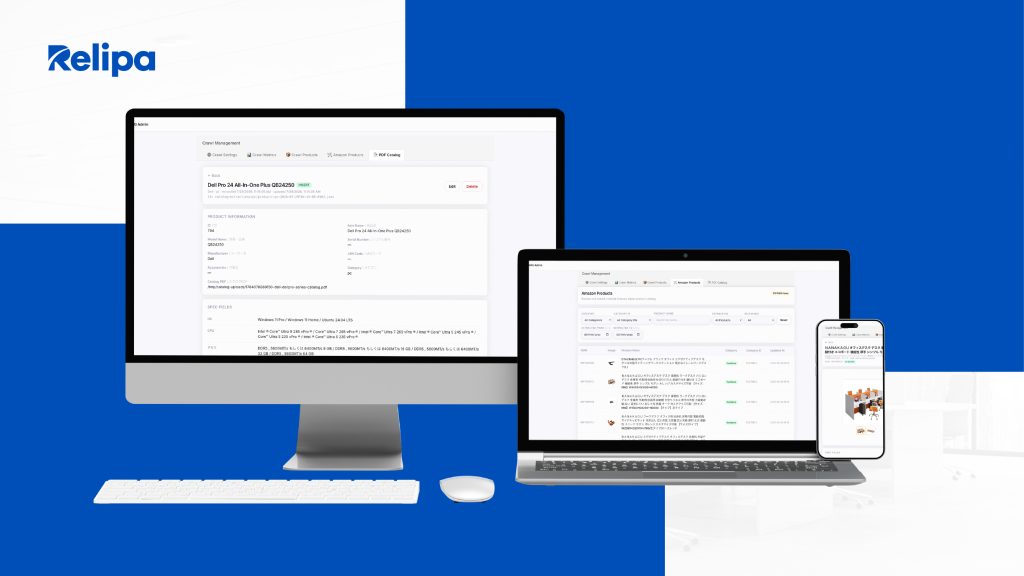
One of the most common enterprise use cases is the RAG-powered chatbot.
Unlike generic AI chat interfaces, enterprise RAG chatbots answer questions based on approved business information.
Instead of generating responses from public training data alone, they retrieve knowledge from internal repositories and generate responses grounded in those sources.
We have seen organizations use this approach to support:
- Internal knowledge management
- Customer support
- Technical documentation access
- Product assistance
- Employee onboarding
- Policy navigation
If your organization is evaluating enterprise knowledge assistants, you may find it useful to review our RAG chatbot implementation case study, which demonstrates how retrieval-based architectures can improve answer quality, reduce information search time, and create practical business value from existing organizational knowledge.
Naturally include a contextual link here to your RAG chatbot case study page when publishing.
Read more: AST AI Agents – CS RAG Agent | AI Customer Support Case Study by Relipa
When Should an Organization Invest in RAG?
Not every AI initiative requires RAG.
If the use case primarily involves content generation or simple automation, other architectures may be sufficient.
RAG becomes particularly valuable when:
- Information changes frequently
- Internal knowledge is important
- Answer accuracy matters
- Source attribution is required
- Enterprise data must remain under governance controls
- Users need reliable access to organizational expertise
In these situations, RAG often delivers significantly more business value than relying on a standalone language model.
This is one reason organizations across healthcare, finance, manufacturing, software, education, and professional services are investing heavily in enterprise RAG capabilities.
RAG Is Becoming Infrastructure for Enterprise AI
Many executives initially view RAG as a specific AI application.
Increasingly, it is becoming something broader.
It is becoming infrastructure.
Just as organizations invested in databases, cloud environments, and APIs, many are now investing in enterprise knowledge layers that power multiple AI use cases simultaneously.
Customer support systems.
Internal copilots.
Knowledge assistants.
Decision-support applications.
Agentic AI systems.
All of these can benefit from the same knowledge foundation.
This is where strategic investments in RAG development services often generate the greatest return.
The organization is not simply building a chatbot.
It is building an AI-ready knowledge platform.
Enterprise AI Is Only as Good as the Knowledge Behind It
The excitement surrounding generative AI has created enormous opportunities.
It has also highlighted a practical reality.
Enterprise AI cannot rely on public knowledge alone.
Organizations create value through proprietary information, specialized expertise, operational knowledge, and internal processes.
RAG bridges the gap between powerful language models and enterprise knowledge.
It enables AI systems to provide answers that are accurate, contextual, governed, and aligned with business reality.
For organizations evaluating RAG development services, the goal should not be simply deploying another AI tool.
The goal should be creating a knowledge architecture that supports enterprise AI applications for years to come.
The companies that succeed with AI will not necessarily be those with the largest models.
They will often be the ones whose AI systems have access to the right information at the right time.
Relipa
Relipa is a Vietnam-based software development company established in April 2016. After two years of growth, our Japanese branch – Relipa Japan – was officially founded in July 2018.
We provide services in MVP development, web and mobile application development, and blockchain solutions. With a team of over 100 professional IT engineers and experienced project managers, Relipa has become a reliable partner for many enterprises and has successfully delivered more than 500 projects for startups and businesses worldwide.
