
The internet is evolving once again. After the static information pages of Web1 and the interactive social platforms of Web2, a new generation of the internet is emerging—Web3. Powered by blockchain technology, Web3 introduces a decentralized digital ecosystem where users gain greater control over their data, digital identities, and online interactions.
In the Web2 era, large technology companies dominated digital platforms, controlling user data, algorithms, and monetization models. However, Web3 challenges this structure by introducing decentralized networks that distribute control across communities rather than concentrating power within a few corporations.
Within this new environment, blockchain technology enables transparent governance models where users can participate in decision-making processes. Instead of being passive participants, individuals may vote on protocol updates, influence platform rules, and contribute to the evolution of digital ecosystems.
Transparency is a key pillar of this transformation. Blockchain networks record transactions in immutable ledgers, ensuring that data cannot be altered without consensus from the network. This mechanism replaces centralized trust with cryptographic trust, creating more secure and transparent digital environments.
As Web3 adoption accelerates, businesses across industries are exploring decentralized technologies to build innovative products and services. From decentralized finance platforms to NFT marketplaces and digital identity systems, organizations are leveraging blockchain to create entirely new business models.
To implement these solutions effectively, many enterprises are collaborating with a blockchain development company that specializes in building secure and scalable Web3 infrastructure. These companies provide technical expertise in blockchain architecture, smart contract development, and decentralized application deployment.
Looking ahead to 2024 and beyond, Web3 applications are expected to reshape industries ranging from finance and gaming to supply chain management and digital media. With the support of an experienced blockchain development company, organizations can accelerate their transition into decentralized ecosystems while ensuring security, compliance, and long-term scalability.
Many organizations today partner with a blockchain development company to design secure Web3 platforms and scalable decentralized systems.
>>> What is Web3.0? Detailed explanation of what we can do, service examples, and the latest trends!
Web3 and NFT: Tokenization of Traditional Assets
One of the most transformative trends emerging from Web3 technology is the tokenization of real-world assets. Tokenization refers to the process of converting physical or traditional financial assets into digital tokens stored on a blockchain network.
These assets may include:
-
Real estate
-
Stocks and bonds
-
Art and collectibles
-
Commodities
-
Intellectual property
By transforming these assets into blockchain-based tokens, ownership can be represented digitally and transferred efficiently across decentralized networks.
This innovation dramatically increases liquidity, transparency, and accessibility within traditionally rigid financial markets.
A notable example of this trend can be seen in the commercial real estate sector. Platforms such as Red Swan are pioneering tokenized real estate investment by converting large property assets into fractional digital shares. Through this approach, investors can purchase small portions of high-value properties that were previously accessible only to institutional investors.
The impact of tokenization goes far beyond convenience. It opens the door for a more inclusive investment landscape, where individuals around the world can participate in asset classes that were previously restricted to wealthy investors or large financial institutions.
Industry experts believe that tokenization could become one of the most important innovations in global finance. According to research conducted by Northern Trust and HSBC, it is estimated that 5% to 10% of global assets may be digitized by 2030.
Current on-chain data already indicates that billions of dollars worth of assets have been tokenized, signaling the beginning of a massive transformation in financial infrastructure.
A professional blockchain development company plays a crucial role in enabling tokenization platforms. These companies design secure token standards, build smart contract systems that represent asset ownership, and ensure regulatory compliance within digital asset ecosystems.
For industries like real estate, tokenization also enables fractional ownership, faster settlement processes, and global investment accessibility. Instead of waiting weeks to finalize property transactions, blockchain-based systems can execute ownership transfers almost instantly.
As more investors and institutions recognize the benefits of blockchain-powered asset management, tokenization is expected to grow rapidly in the coming years. By working with an experienced blockchain development company, businesses can create secure tokenization platforms that unlock new revenue streams and expand access to global capital markets.
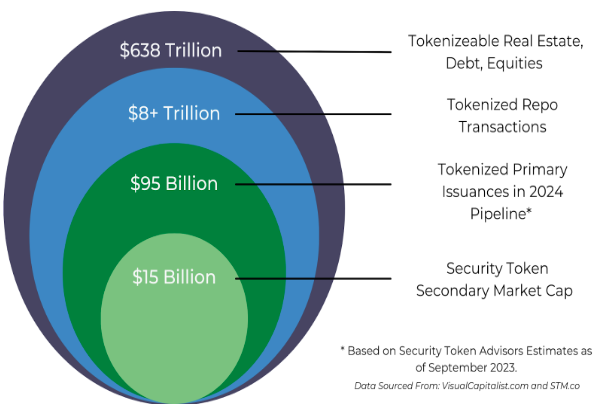
Source: CoinDesk
Web3 and AI: New Opportunities Related to AI
Artificial intelligence is becoming an essential component of the Web3 ecosystem. When combined with blockchain technology, AI can significantly enhance the capabilities of decentralized platforms.
AI systems can analyze large datasets generated within blockchain networks to provide intelligent insights, automate processes, and deliver personalized user experiences.
For example, decentralized platforms may use AI algorithms to analyze user behavior and deliver tailored content recommendations. In financial applications, AI can detect fraudulent transactions or optimize investment strategies by analyzing blockchain transaction data.
The integration of AI with Web3 also enables the creation of advanced virtual environments. Technologies such as augmented reality, digital avatars, and intelligent agents may transform how people interact in decentralized digital spaces.
However, the rapid growth of AI-driven systems also introduces new challenges. As automation increases, certain job roles may become obsolete. At the same time, entirely new professions will emerge, including AI system trainers, blockchain analysts, and prompt engineers.
Governments and regulatory bodies will also play a crucial role in ensuring that these technologies are used responsibly. Ethical frameworks and compliance systems will be necessary to balance innovation with social responsibility.
For organizations exploring the integration of AI and Web3 technologies, partnering with a specialized blockchain development company can accelerate development and reduce technical complexity.
These companies provide expertise in combining blockchain infrastructure with machine learning systems, enabling businesses to create innovative decentralized platforms powered by intelligent automation.
Web3 Games: More innovative GameFi “Play and Earn”
Over the past few years, Web3 gaming has emerged as one of the fastest-growing segments within the blockchain ecosystem. By integrating blockchain technology into gaming platforms, developers can create decentralized game environments where players truly own their digital assets.
Unlike traditional online games where all assets are controlled by game publishers, Web3 games allow players to hold ownership of in-game items such as characters, skins, weapons, and virtual land through blockchain-based tokens. These assets are typically represented as NFTs (Non-Fungible Tokens), enabling them to be traded, transferred, or sold across different platforms.
The Web3 gaming market has already experienced rapid growth. In 2022, the global Web3 gaming industry reached approximately $4.6 billion in value. Industry forecasts suggest that this market could grow to nearly $30 billion by 2030, representing a strong annual growth rate.
A major factor behind this growth is the introduction of innovative game models such as play-to-earn (P2E). Games like Axie Infinity popularized this concept by allowing players to earn cryptocurrency rewards through gameplay.
Web3 games offer several advantages compared to traditional games, including:
-
True ownership of in-game assets
-
Opportunities for players to earn digital rewards
-
Interoperability across gaming ecosystems
-
Player-driven economies
-
New revenue streams for developers
Another emerging concept in the gaming sector is GameFi, which combines elements of gaming and decentralized finance. Through GameFi ecosystems, players can earn cryptocurrency rewards that may be exchanged for real-world value.
However, building a successful GameFi ecosystem requires complex technical infrastructure, including smart contracts, tokenomics models, and secure digital asset management systems.
For this reason, many gaming studios partner with a professional blockchain development company to build scalable blockchain gaming platforms. These companies provide expertise in smart contract development, NFT integration, and decentralized game architecture.
As Web3 gaming continues to evolve, developers are expected to introduce more immersive and sophisticated experiences that blend entertainment with decentralized economies.
Read more: Move to Earn – The latest NFT game that connects virtuality and reality
“Play and Earn” instead of “Play to Earn”
Although the play-to-earn model generated massive excitement within the Web3 gaming community, it also revealed some sustainability challenges.
In early P2E games, many players joined primarily for financial rewards rather than gameplay enjoyment. This created economic imbalances in some game ecosystems, where token inflation reduced the long-term value of in-game currencies.
A well-known example is the inflation of the SLP token in Axie Infinity, which demonstrated how unsustainable reward models can disrupt game economies.
As a result, the industry is now shifting toward a play-and-earn model. In this approach, financial rewards complement gameplay rather than dominating it.
Developers are focusing on creating games that are enjoyable and engaging first, while still offering opportunities for players to earn digital assets as part of the experience.
This transition requires careful design of tokenomics, the economic structure governing digital tokens within a game ecosystem. Balanced reward mechanisms, limited token supply, and long-term player engagement strategies are essential for maintaining a stable in-game economy.
Game developers are also experimenting with hybrid models that combine traditional game design principles with blockchain-powered incentives.
To implement these systems effectively, many studios collaborate with an experienced blockchain development company capable of designing secure smart contracts and sustainable token economies.
By prioritizing gameplay quality while maintaining economic incentives, the play-and-earn model is expected to drive the next wave of innovation in Web3 gaming.
Web3 and Finance
The financial industry is undergoing a major transformation as blockchain technology reshapes traditional banking and payment systems.
Web3 financial services enable users to interact directly with decentralized financial platforms without relying on traditional intermediaries such as banks or payment processors.
One of the most prominent examples of this transformation is Decentralized Finance (DeFi). DeFi platforms allow users to lend, borrow, trade, and earn interest on digital assets through smart contracts deployed on blockchain networks.
Smart contracts automatically execute financial transactions according to predefined rules, reducing the need for manual processing and minimizing operational costs.
Major financial institutions are beginning to recognize the potential of blockchain-based financial infrastructure. Companies like Mastercard have already announced partnerships with blockchain platforms and trading networks to support cryptocurrency payments and digital asset integration.
Web3 banking platforms offer several advantages, including:
-
Faster transaction processing
-
Lower transaction costs
-
Increased transparency
-
Greater control over personal assets
-
Improved financial accessibility
Users can access financial services from anywhere in the world without requiring approval from centralized institutions.
For financial organizations planning to develop decentralized platforms, working with a trusted blockchain development company is critical. These companies provide expertise in building secure financial protocols, integrating blockchain payment systems, and ensuring regulatory compliance.
As Web3 technologies continue to mature, decentralized financial services are expected to play an increasingly important role in the global economy.
Web3 Social Platform
Social media has become an essential part of modern digital life. However, traditional social platforms are often criticized for centralized control over user data, content moderation policies, and monetization models.
Web3 social platforms aim to redefine the social media landscape by introducing decentralized networks where users retain ownership of their content and digital identities.
Instead of relying on centralized servers controlled by large technology companies, Web3 social platforms operate on blockchain infrastructure. This decentralized architecture ensures transparency, security, and censorship resistance.
In Web3 social networks, users can create, manage, and monetize their content without intermediaries. Content creators may receive cryptocurrency rewards or token-based incentives directly from their communities.
Key advantages of Web3 social platforms include:
-
Greater user privacy and data ownership
-
Transparent content moderation processes
-
Community-driven governance systems
-
Direct monetization opportunities for creators
-
Secure digital identity management
Blockchain encryption also enhances security by protecting user data and preventing unauthorized access.
Because decentralized platforms eliminate single points of failure, issues such as server outages, data leaks, and centralized censorship can be significantly reduced.
Building a decentralized social ecosystem requires sophisticated blockchain architecture and scalable network infrastructure. Therefore, companies seeking to develop Web3 social platforms often collaborate with a specialized blockchain development company to design and implement secure decentralized networks.
As the demand for privacy-focused social platforms increases, Web3-based communities are expected to expand rapidly in the coming years.
Web3 in AR and VR
The transition from Web2 to Web3 is also accelerating the development of immersive digital environments powered by Augmented Reality (AR) and Virtual Reality (VR) technologies.
These technologies allow users to interact with digital spaces in ways that closely resemble real-world experiences.
When combined with blockchain infrastructure, AR and VR platforms can create fully decentralized virtual environments where users own digital assets, conduct transactions, and participate in virtual economies.
Several industries are already exploring the potential of these technologies, including:
-
Virtual gaming environments
-
Digital shopping experiences
-
Virtual banking platforms
-
Remote collaboration spaces
For example, blockchain-enabled AR platforms could allow users to purchase digital items and securely store them as NFTs in their digital wallets.
The convergence of AR, VR, and blockchain technologies also opens new opportunities for marketing and customer engagement. Brands can create immersive digital experiences where users interact with products in virtual environments before making purchasing decisions.
According to industry research, the demand for AR and VR technologies continues to grow rapidly. As companies compete to establish their presence in virtual worlds, blockchain technology will play a crucial role in securing digital assets and enabling decentralized ownership.
Organizations seeking to build these immersive platforms often rely on an experienced blockchain development company to integrate blockchain systems with AR and VR technologies effectively.
Web3 Metaverse
The concept of the metaverse has gained significant attention in recent years. A metaverse is a persistent virtual environment where users interact with digital spaces, participate in economic activities, and engage with communities through immersive experiences.
Within the Web3 ecosystem, the metaverse is powered by blockchain technology, which enables secure ownership of digital assets such as avatars, virtual land, and collectibles.
Major brands are already experimenting with metaverse platforms to enhance customer engagement and explore new business models.
For example, Starbucks introduced Starbucks Odyssey, a metaverse-based loyalty program where users can collect NFT rewards and participate in interactive digital experiences.
The metaverse also introduces new forms of entertainment, including virtual concerts, exhibitions, and digital events. Artists such as Marshmello have already performed concerts in virtual environments, attracting audiences from around the world.
One of the most exciting developments in the metaverse is the concept of Metaverse-as-a-Service (MaaS). This model allows businesses to create virtual storefronts, digital experiences, and interactive communities within existing metaverse platforms.
Industry analysts predict that the global metaverse market could reach $5 trillion by 2030, highlighting the enormous economic potential of virtual environments.
Developing metaverse platforms requires advanced expertise in blockchain infrastructure, 3D environments, and decentralized asset management. As a result, many companies collaborate with a professional blockchain development company to build scalable and secure metaverse ecosystems.
Summary
Web3 represents the next stage in the evolution of the internet, introducing decentralized systems that empower users while reducing reliance on centralized platforms.
From tokenized assets and decentralized finance to immersive metaverse experiences and blockchain-based gaming ecosystems, Web3 technologies are transforming digital industries at an unprecedented pace.
Although the full potential of Web3 is still unfolding, many technology companies and investors strongly believe in the long-term value of decentralized innovation.
Businesses seeking to enter the Web3 market must navigate complex technical challenges, including blockchain architecture, smart contract security, and digital asset management.
Partnering with a reliable blockchain development company can significantly simplify this process. These specialized companies provide the expertise required to design scalable blockchain infrastructure, build decentralized applications, and implement secure smart contracts.
Relipa serves as a trusted partner for organizations looking to develop innovative Web3 solutions. Our experienced blockchain engineers possess deep knowledge of the three core pillars of Web3 technology: blockchain networks, smart contracts, and digital assets.
From concept development to deployment and long-term support, our team helps businesses transform ideas into fully functional blockchain platforms.
If your organization is considering implementing a Web3 solution or launching a decentralized application, our experts are ready to assist you in building secure and scalable blockchain systems.
Feel free to contact us to discuss how our blockchain development company can support your next Web3 project.
